
Performance Marketing
Why Your Paid Ads Perform Well but Your Overall Marketing Doesn’t
October 7, 2026 · 2 min read · by qcvimarketing@qcverify.com
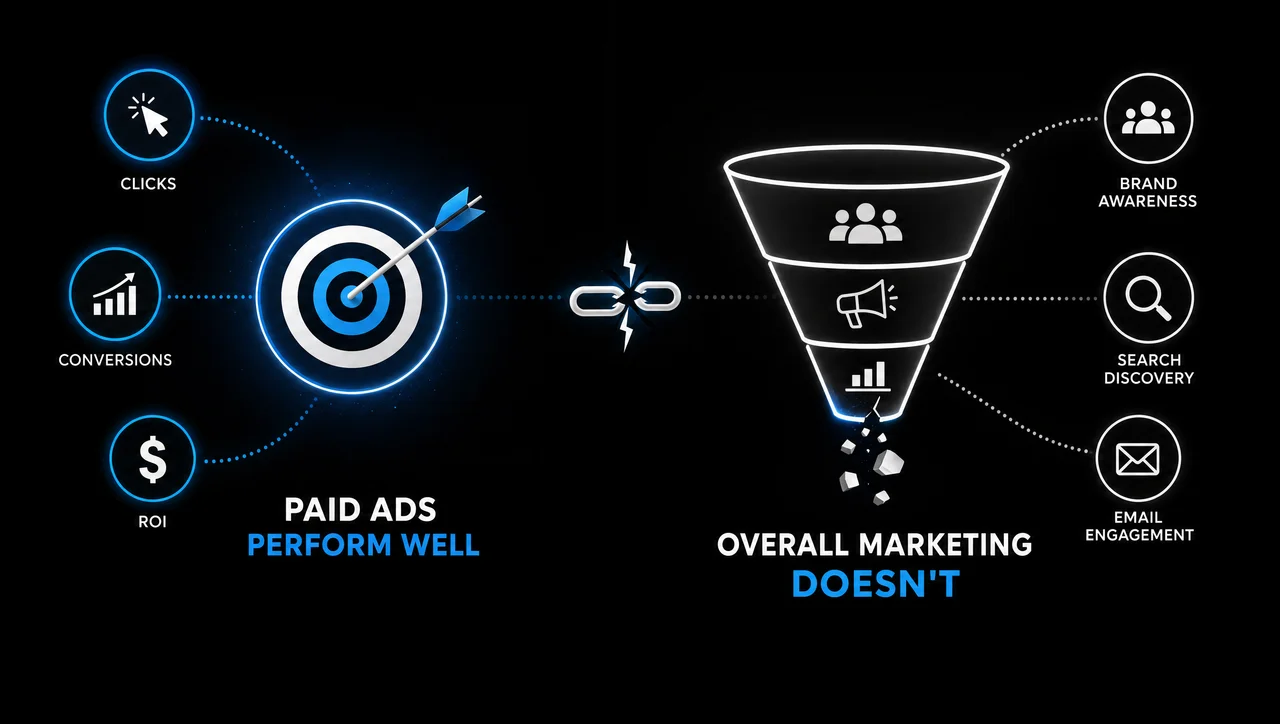
A strong ROAS can hide a weak marketing system. You may see profitable campaigns in Google or Meta while sales growth stays flat, leads remain inconsistent, or customer acquisition gets more expensive. The ad account may be working while the rest of the customer journey leaks value. Paid ads only control the journey up to the click. What happens after that matters just as much.
The Ad Gets the Click. The Landing Page Has to Earn the Next Step.
A mismatch between ad copy and landing page is a common problem. If an ad promises a specific offer or result and the page makes visitors search for it, conversion rate drops. The campaign can still show a healthy click-through rate and decent ROAS while potential customers disappear after the click. That is why landing page optimization and conversion rate optimization need to sit alongside paid media performance, not outside it.
Your Acquisition Numbers Can Look Better Than Your Business Numbers
Platform ROAS does not tell you whether new revenue covers fulfillment, discounts, returns, or other variable costs. Looking at blended CAC, contribution margin, and marketing attribution gives you a clearer view of whether customer acquisition is actually working.
A campaign that looks excellent inside an ad platform may look very different once you account for the full economics. That is why performance marketing needs to be measured against business outcomes, not platform metrics alone.
What Happens After the First Purchase?
If email, CRM, remarketing, retention or sales follow-up are weak, you keep paying to acquire customers who could have been worth more. The result is a business that needs fresh ad spend every month to maintain revenue.
A full funnel marketing approach connects these pieces. Paid media can share data with your website, SEO, content, CRM, and conversion systems. Search behavior can inform landing pages and organic content. Audience data can also reveal where conversion is strong, but repeat purchases are weak.
You can compare channels using the same business metrics instead of giving each platform its own scoreboard. The useful question is where revenue is being created, where it is being lost, and which part of the funnel needs attention.
Final Thoughts
Good paid ads are worth keeping, but they don't prove the whole marketing system is healthy. If campaigns produce clicks and conversions but growth still feels stuck, inspect the handoffs between acquisition, conversion, and retention. Your next gain may come from fixing what happens after the ad, not spending more on the ad itself.
FAQ
Frequently asked questions
Why are my ads performing well but sales are low?
Is ROAS enough to measure paid advertising performance?
How does conversion rate optimisation affect paid ads?
Next step
Discuss this for your team
Book a strategy call and we'll apply this thinking to your accounts.