
Why Mortgage Websites Need Conversion Rate Optimization
August 31, 2026 · 2 min read · by qcvimarketing@qcverify.com
Explore how mortgage websites can improve lead generation by reducing conversion friction, aligning landing pages with search intent, and strengthening trust.
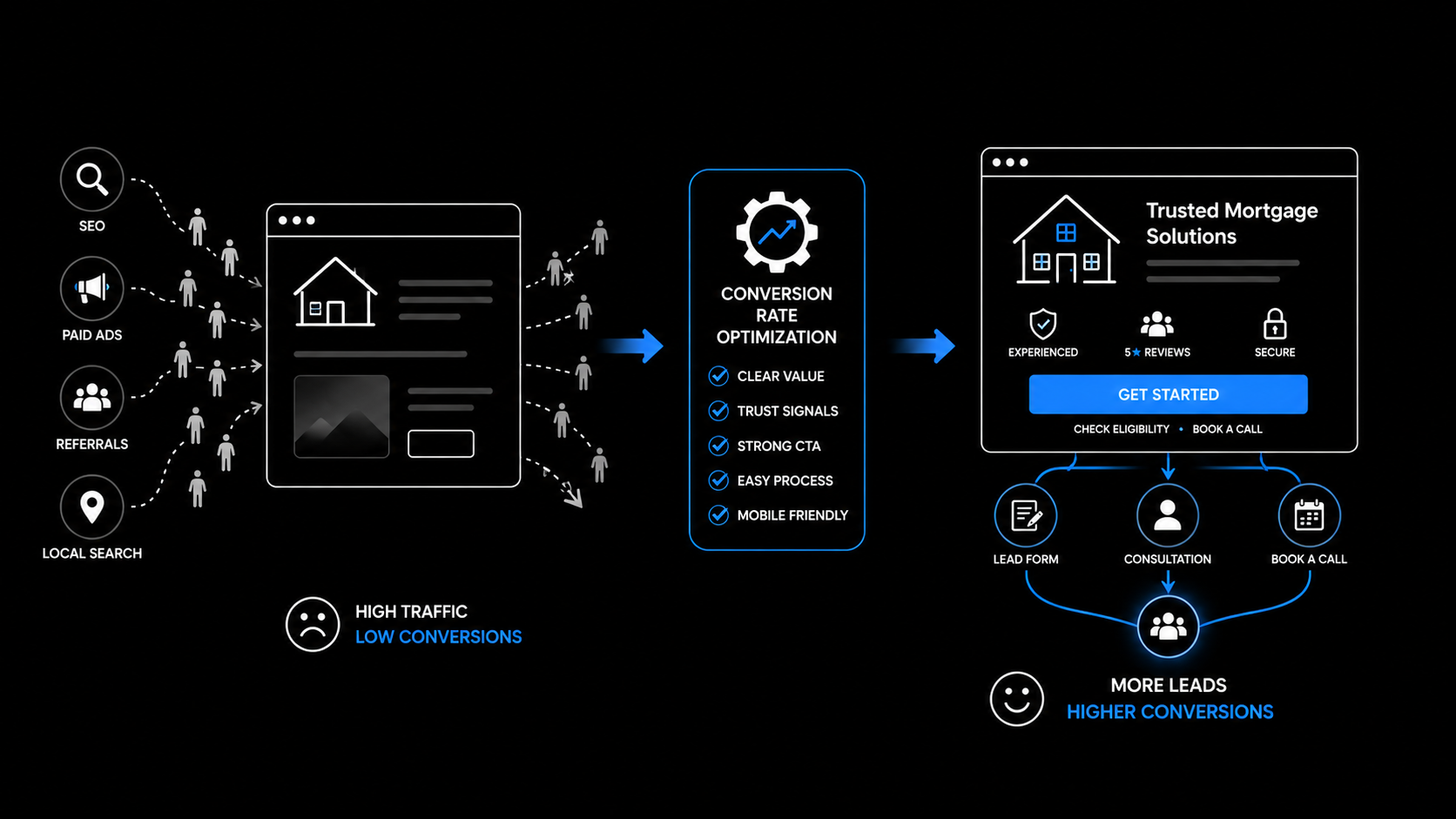
Thousands of people can land on a mortgage website through SEO, paid ads, referrals, and local search and still, most of that traffic walks away empty-handed. Why? Because traffic doesn’t create leads on its own. If a visitor can’t quickly figure out what you offer, whether you’re trustworthy, or what to do next, they’ll bounce before ever filling out a form.
That’s the gap conversion rate optimisation for mortgage websites is meant to close. CRO is about getting more of your visitors to do something: request a consultation, fill out a lead form, check their eligibility, or book a call.
Turning Website Traffic Into Real Mortgage Leads
Nobody hands over their financial details just because a site looks sleek. Mortgage decisions carry real weight, so visitors need to feel confident before they’ll share personal information. A website built for conversions answers the obvious questions upfront: What kind of mortgage help is on offer? Who’s it actually for? What happens after someone submits an enquiry? And why pick this lender or broker over anyone else?
Get the messaging right, keep service pages relevant, make contact easy to find, and back it all up with genuine trust signals that’s what clears the uncertainty out of a visitor’s way.
Cutting the Friction Out of Lead Generation
A common mistake mortgage sites make: asking for too much, too soon. Nobody wants to hand over detailed financial information the moment they land on a page, especially if they’re still just researching. Mortgage lead conversion tends to
improve once that first step feels low stakes. Think of a shorter form, a simple consultation booking option, or an interactive calculator- something useful that doesn’t ask for a big commitment right away. The point isn’t to rack up more form submissions for the sake of it. It’s about making the path easier for the borrowers who are actually qualified.
Matching Landing Pages to Search Intent
Someone searching for first-time buyer advice isn’t looking for the same thing as someone comparing refinancing options or investment property loans. Send them both to the same generic page, and you’re creating friction that doesn’t need to exist. Mortgage landing page optimisation means matching what a visitor searched for with the page, message, and call to action they actually land on. The headline should mirror their expectations, and the content should speak directly to their situation.
Do this well, and both paid campaigns and organic traffic work much harder.
Building Trust Into the Conversion Process
Before anyone acts, they need a reason to trust you that means licensing details, testimonials, transparent service information, experienced loan professionals, security assurances, and the right disclosures, all visible. This matters more here than in most industries. A mortgage isn’t a small purchase; it’s one of the biggest financial commitments a person will make, and they’re choosing who to trust with it.
Final Thoughts
CRO for mortgage websites isn’t about piling on more buttons or overhauling every page. It’s about spotting where potential borrowers hesitate and clearing that hesitation. SEO gets the right people to your site. CRO gives them a reason and an easy path to become leads. Put the two together, and a mortgage website stops being a digital brochure and starts working as a real lead generation engine.
Frequently asked questions
What is conversion rate optimisation for mortgage websites?
Why does CRO matter for mortgage lead generation?
How do I improve my mortgage website’s conversion rate?
Does mortgage SEO help with conversions?
Want to discuss something similar for your team?
Book a strategy call