
Mortgage Marketing / Lead Generation
Why Mortgage Leads Fail to Convert: A Funnel Diagnostic Checklist
November 11, 2026 · 2 min read · by qcvimarketing@qcverify.com
Generating mortgage enquiries is only the beginning. Learn how to identify conversion problems across advertising, landing pages, lead response, sales conversations and borrower trust.
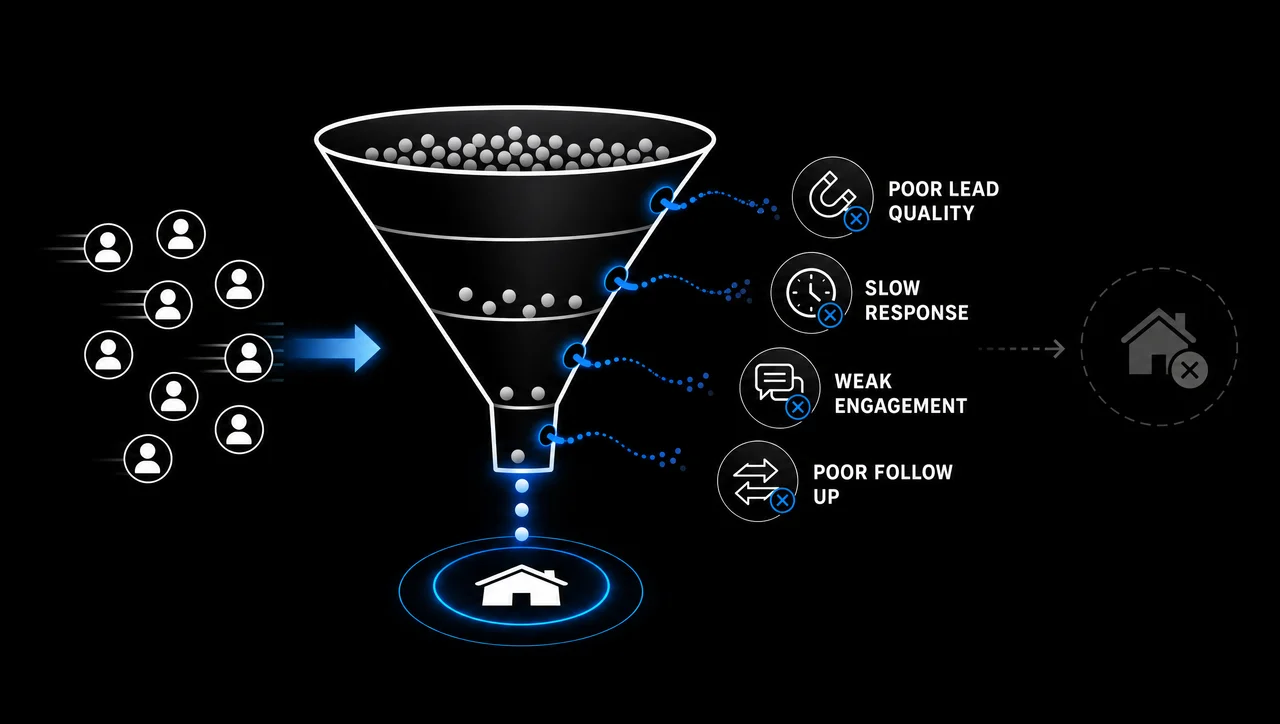
A mortgage brokerage receives 60 enquiries a month, but only a handful agree to discuss their financing needs. The marketing team sees a steady flow of leads, while loan officers wonder why so few turn into real opportunities.
This situation often points to a problem somewhere in the conversion process. Someone may click an ad with genuine interest but lose confidence after reaching the website. Another may submit a form and never receive a timely response.
Understanding why mortgage leads fail to convert requires examining each stage of the lead generation funnel.
Check Whether Your Campaigns Attract the Right Borrowers
Start with the source of your enquiries. Someone searching for mortgage pre-approval is likely at a different stage from someone casually researching interest rates.
If your advertising attracts people who are outside your service area, looking for unsuitable loan products, or simply collecting information, conversion rates will remain low.
Review search terms, audience targeting, location settings, and the enquiries you actually receive. Your mortgage lead generation strategy should reflect the borrowers your brokerage can realistically serve.
Examine What Happens After the Ad Click
A visitor who clicks an advertisement expects the landing page to answer the same question that prompted the search. If an ad promotes refinancing but the page discusses several unrelated loan services, the visitor has little reason to continue.
Check whether the page explains the service clearly, provides relevant information and makes the next step obvious. Long forms can also discourage enquiries. Ask only for details needed to begin the conversation.
Landing page conversion optimisation for mortgage businesses should make it easier for interested borrowers to take action.
Find Out How Quickly Leads Receive a Response
A submitted form needs a timely response. If a potential borrower waits too long, they may contact another brokerage before your team reaches out.
Review your CRM records to see when enquiries arrive and when loan officers first respond. Check whether missed calls, unanswered emails or unassigned leads are creating gaps.
A clear lead assignment process helps prevent interested borrowers from being overlooked.
Review Follow-Up Conversations
Some borrowers are ready to apply, while others still have questions about credit requirements, documentation or available loan options. Sending the same follow-up message to everyone rarely addresses these differences.
Review call notes and email conversations. Are loan officers answering the borrower’s actual questions? Are they explaining the next step clearly? This can reveal why prospects stop responding.
Check for Trust and Compliance Issues
Mortgage decisions involve sensitive financial information. Visitors need to understand who they are contacting and how their information will be handled. Missing business details, unclear privacy information or unsupported advertising claims can create hesitation.
Final Thoughts
When mortgage leads fail to convert, increasing advertising spend is rarely the first fix worth making. Start by finding the stage where prospects disappear. Reviewing campaign relevance, landing page behaviour, response times and sales conversations can reveal problems that lead volume alone will never show. A well-managed mortgage marketing system should connect each stage, from the first click to a meaningful conversation and eventually a funded loan.
FAQ
Frequently asked questions
Why do mortgage companies get leads but no applications?
What is a good mortgage lead conversion rate?
How can mortgage brokers improve lead conversion?
Next step
Discuss this for your team
Book a strategy call and we'll apply this thinking to your accounts.