
Conversion Optimization
Why More Website Traffic Isn’t Always the Answer to Slow Business Growth
September 25, 2026 · 2 min read · by qcvimarketing@qcverify.com
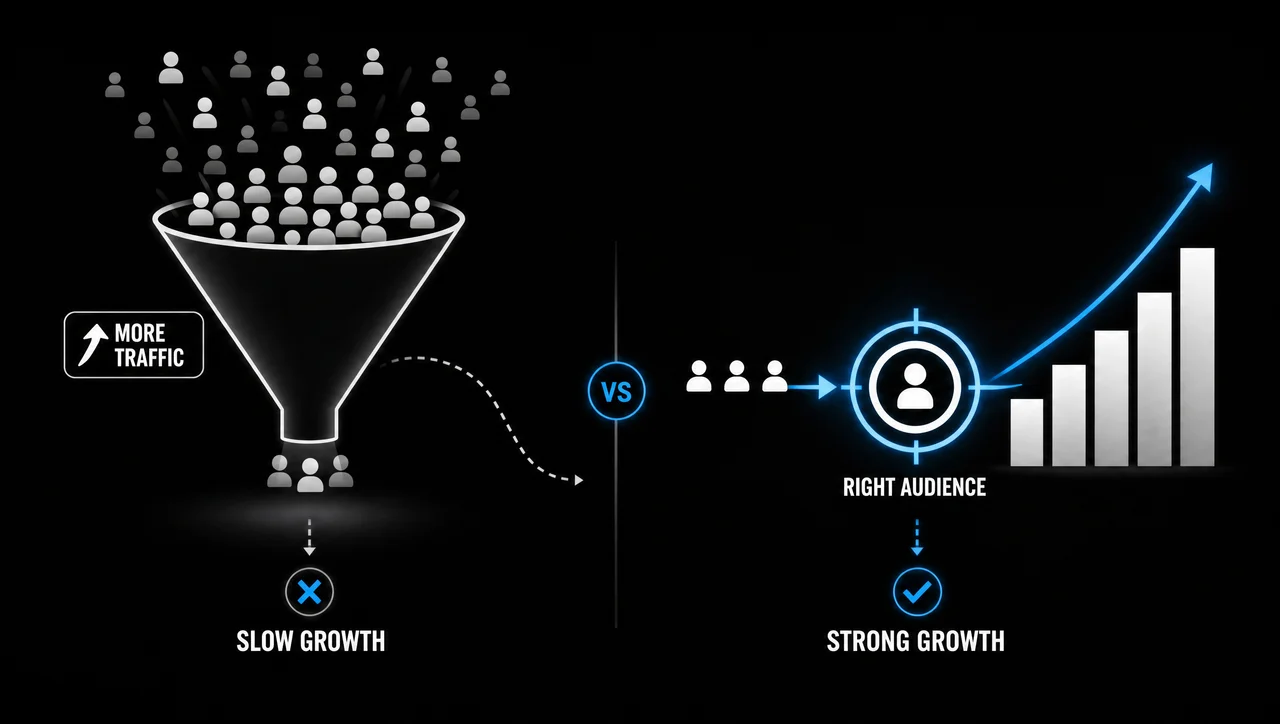
More people are visiting your website, but sales are barely moving.
That situation is more common than it looks. A business can increase website traffic month after month and still struggle to generate qualified leads, inquiries, or purchases. The problem may have nothing to do with how many people reach the site. It may be what happens after they arrive.
Traffic Does Not Mean Intent
A visitor is only useful to the business if they have a reason to take the next step.
You might attract thousands of visitors through organic search, paid advertising, social media, or referral traffic. But if most of them are looking for something different, landing on the wrong page, or leaving before they understand the offer, the extra traffic will not change much.
This is where qualified website traffic matters. A smaller audience with a clear reason to buy can be more valuable than a much larger audience that is simply browsing.
Look at What Happens After the Click
When growth slows, teams often look at traffic first. The more useful numbers can be further down the funnel.
Check your website conversion rate. See which landing pages receive traffic and whether they generate inquiries or sales. Check where visitors leave, how users move through the site, and whether your calls to action make sense for the page.
A paid campaign can send plenty of people to a website. If the landing page doesn't match the ad or visitors can't quickly see what to do next, increasing the advertising budget sends more people into the same problem.
Fix the Conversion Problem Before Buying More Traffic
This is where conversion optimization becomes important. Sometimes the issue is simple. The offer is unclear. The page takes too long to load. The form asks for too much information. The message speaks about the company instead of the customer’s problem.
Other times, the issue is deeper. Your digital marketing strategy may be attracting the wrong audience in the first place. Before chasing more organic traffic or increasing paid spend, compare traffic quality with actual business results. Which sources produce leads? Which pages produce inquiries? Which campaigns bring customers, not just clicks? That comparison gives you something much more useful than a rising traffic graph.
Growth Starts After the Visitor Arrives
Website traffic still matters. You cannot grow a site with no visitors. But traffic is only one part of the equation. If the website is losing potential customers through weak messaging, poor user experience, or a broken conversion path, more visitors will not solve the underlying issue.
A better approach connects acquisition with what happens after the click. Improve the pages that already receive attention, remove unnecessary friction, and make the next step obvious. Then scale the channels that bring the right people.
Final Thoughts
More website traffic can make a healthy funnel bigger. It cannot make a weak funnel work. If growth has stalled, look beyond visitor numbers. Website performance, traffic quality, landing page optimization, and conversion rate can tell you much more about where the real problem sits.
The useful question is not simply, “How do we get more visitors?”
It is, “What happens when the right visitor gets here?”
FAQ
Frequently asked questions
Is more website traffic always good for business?
What is a good website conversion rate?
How can I improve my website conversion rate?
Next step
Discuss this for your team
Book a strategy call and we'll apply this thinking to your accounts.