
B2B Marketing / Marketing Analytics
Why B2B Marketing Needs Different Attribution Models for Multiple Decision-Makers
November 18, 2026 · 2 min read · by qcvimarketing@qcverify.com
B2B purchases rarely involve just one person. Explore how multiple decision-makers influence the buying journey and why attribution models should connect marketing touchpoints across an entire business account.
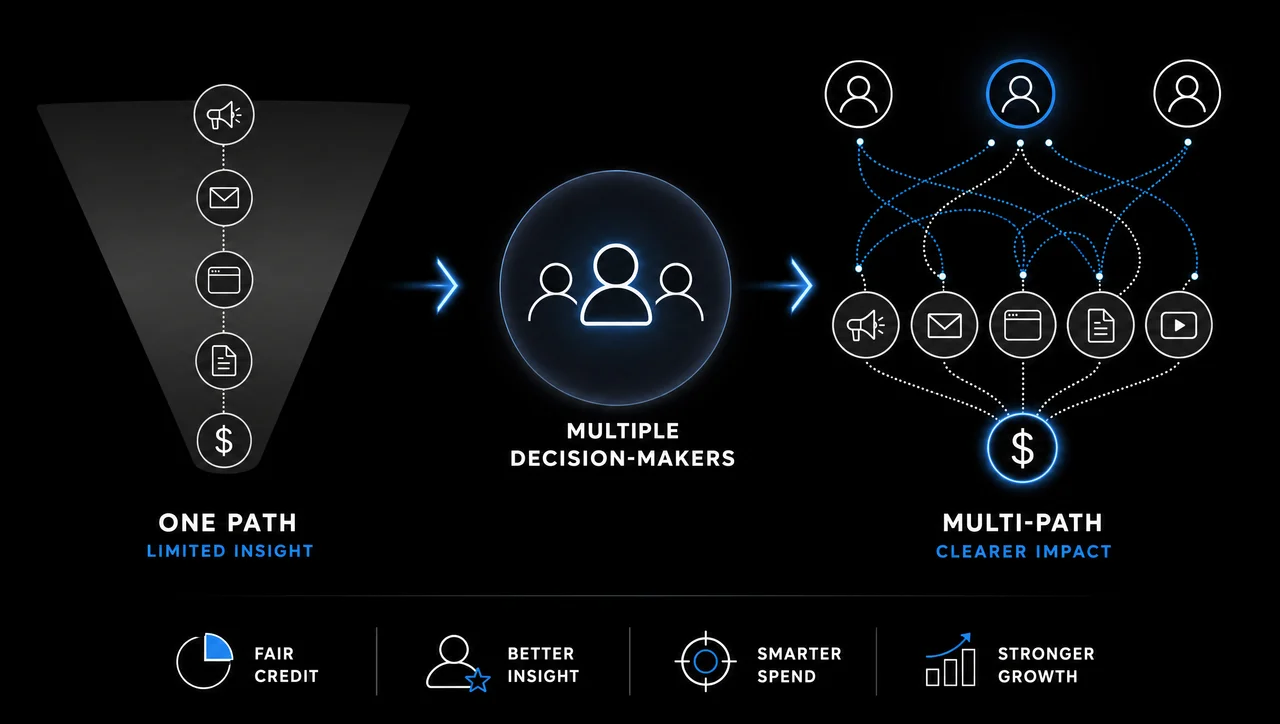
Imagine a company out looking for some new accounting software. The Marketing Manager finds the provider via Google, the IT team reviews the features, and the Finance Director looks at the cost before anything is approved.
Three people have interacted with the business; the marketing report may only show one conversion from a search ad.
That creates a problem when you review your ad spend. The LinkedIn campaign that got the Marketing Manager to look at the software and the email that got the IT team to a product demo may well have been the ones that actually closed the deal. A last click report won’t tell you any of that.
One B2B Purchase, Several Customer Journeys
Business purchases invariably take weeks or months as different departments have their own agendas. The technical side will be asking whether the product will work in the environment. Finance will be looking at the cost. Management will be looking for a good reason to go ahead and buy.
Their research isn’t all happening at the same time. One person might download the guide in January, another might go to the pricing page in February. By the time sales gets an enquiry, several people may have already formed an opinion on the product.
This is the bit that matters when you’re measuring marketing performance. If you count the person who submitted the enquiry form, you’re completely missing the buying process.
Why Last-Click Reports Miss Earlier Marketing Efforts
First-click attribution goes to the first interaction; last-click attribution goes to the last. Neither of those tells the whole story when multiple staff members are involved in the buying process.
Multi-touch attribution looks at more than one touch. A position-based model weights certain touchpoints more heavily, while a data-driven model uses conversion data to determine each channel's contribution.
Some B2B companies also use account-based attribution. Rather than looking at each contact in isolation, they link their activity to the same business account.
The model choice matters, as a campaign with fewer enquiries could still win deals with much higher contract values.
Give Marketing and Sales the Same Customer Records
A CRM can tie all these disparate interactions together. If the campaign records are linked to the company accounts, then you can see whether a webinar attendee, a demo request and a sales meeting all relate to the same account.
This also affects how we assess campaign performance. Instead of just looking at the number of leads each channel produces, we can now see which channels generate qualified opportunities and which actually result in closed revenue.
Marketing data analysis is far more useful when your reports include what happened after the click.
Final Thoughts
Before you pull the money away from a campaign that’s generating low lead numbers, check whether it’s actually helped to get the conversation going with the right people. In B2B marketing, the person who ultimately converts is often very different from the person who influences the decision. Attribution reports need to take that into account.
FAQ
Frequently asked questions
Why is B2B marketing attribution different from B2C attribution?
What is account-based attribution?
Can CRM integration improve B2B attribution?
Next step
Discuss this for your team
Book a strategy call and we'll apply this thinking to your accounts.