
Digital Marketing Strategy
What Happens When SEO, Paid Media and CRO Work From the Same Data?
October 1, 2026 · 2 min read · by qcvimarketing@qcverify.com
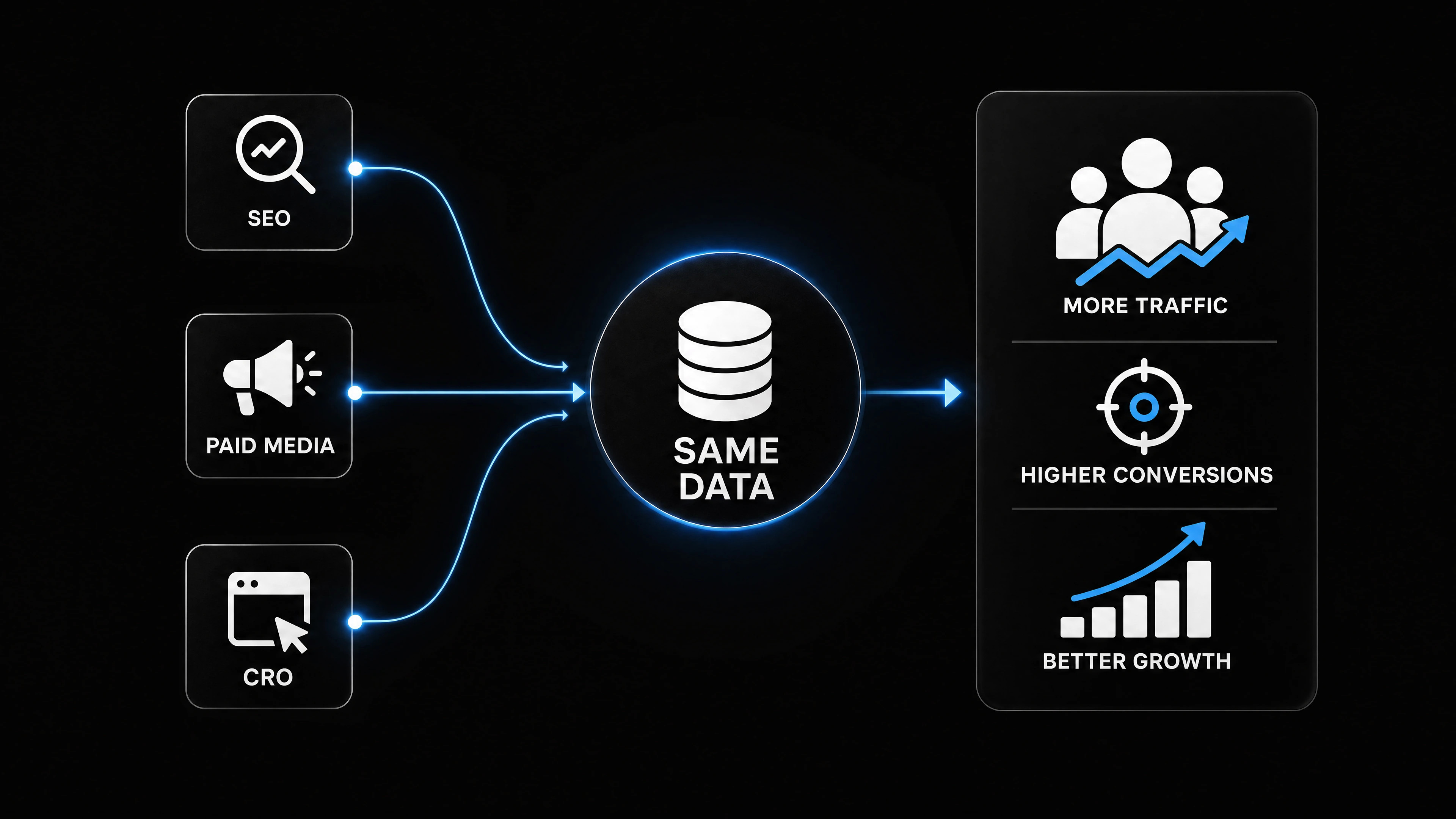
SEO brings in organic traffic. Paid media brings in visitors quickly. CRO works on what happens after they arrive. That sounds like three separate jobs, and in many companies, that is exactly how they are managed. The problem starts when each team works from a different set of numbers.
SEO may focus on rankings and organic traffic. Paid media may report clicks, CPA or ROAS. The CRO team may watch conversion rates and landing page behaviour. Each number can look healthy while the overall customer acquisition system is leaking money. When SEO, paid media and conversion rate optimization work from the same data, those gaps become easier to see.
SEO gets closer to buying intent
Search data tells you what people want before they become customers. Paid search data adds another layer because it shows which queries, offers and messages are producing actual responses. That information can improve an SEO strategy. A search term that converts well through paid search may deserve stronger organic content. A landing page with high intent but weak organic visibility may also point to a content opportunity. Instead of guessing which keywords matter, teams have real conversion data to work with.
Paid media learns what the website proves
Ad platforms can tell you which campaigns generate clicks and reported conversions. Your website can tell you what happens after the click. That difference matters. If a campaign attracts cheap traffic but visitors abandon the landing page, increasing the budget will not fix the problem. CRO data can show where people stop, which message creates confusion, and whether the offer matches the promise made in the ad. The paid media team can then test new creative audiences or offers using evidence from the actual customer journey.
CRO stops working in isolation
CRO becomes more useful when it can see acquisition data.
A landing page with a 5% conversion rate may look successful on its own. But if the customers coming through that page have a high acquisition cost or rarely become valuable customers, the number needs more context. This is where metrics such as blended CAC, revenue and contribution margin become useful. The goal is to improve the conversion rate without losing sight of what those conversions are worth.
The bigger change is how decisions get made
Shared data changes the conversation from “Which channel performed best?” to “Where are we losing value?”
That can lead to better SEO priorities, cleaner paid media decisions and more focused landing page testing. It also makes marketing attribution easier to understand because teams are looking at the same customer journey rather than defending separate channel reports. A connected approach to SEO strategy, paid media, and website and funnel optimization gives each discipline more useful information than it would have alone.
Final Thoughts
SEO, paid media and CRO do different jobs, but they influence the same customer journey. When they share reliable data, the useful insight is often found between channels rather than inside one report. The result is not simply more traffic or better conversion rates. It is a clearer view of which marketing activity actually creates valuable customers.
FAQ
Frequently asked questions
Why should SEO and paid media share data?
How does CRO support paid media?
What data should SEO, paid media and CRO share?
What is the role of marketing attribution?
Next step
Discuss this for your team
Book a strategy call and we'll apply this thinking to your accounts.