
The Growth Marketing Framework Every Business Should Know
August 24, 2026 · 2 min read · by qcvimarketing@qcverify.com
A growth marketing framework connects the full customer journey with measurable business outcomes, helping businesses identify growth barriers, test improvements, and optimise marketing performance.
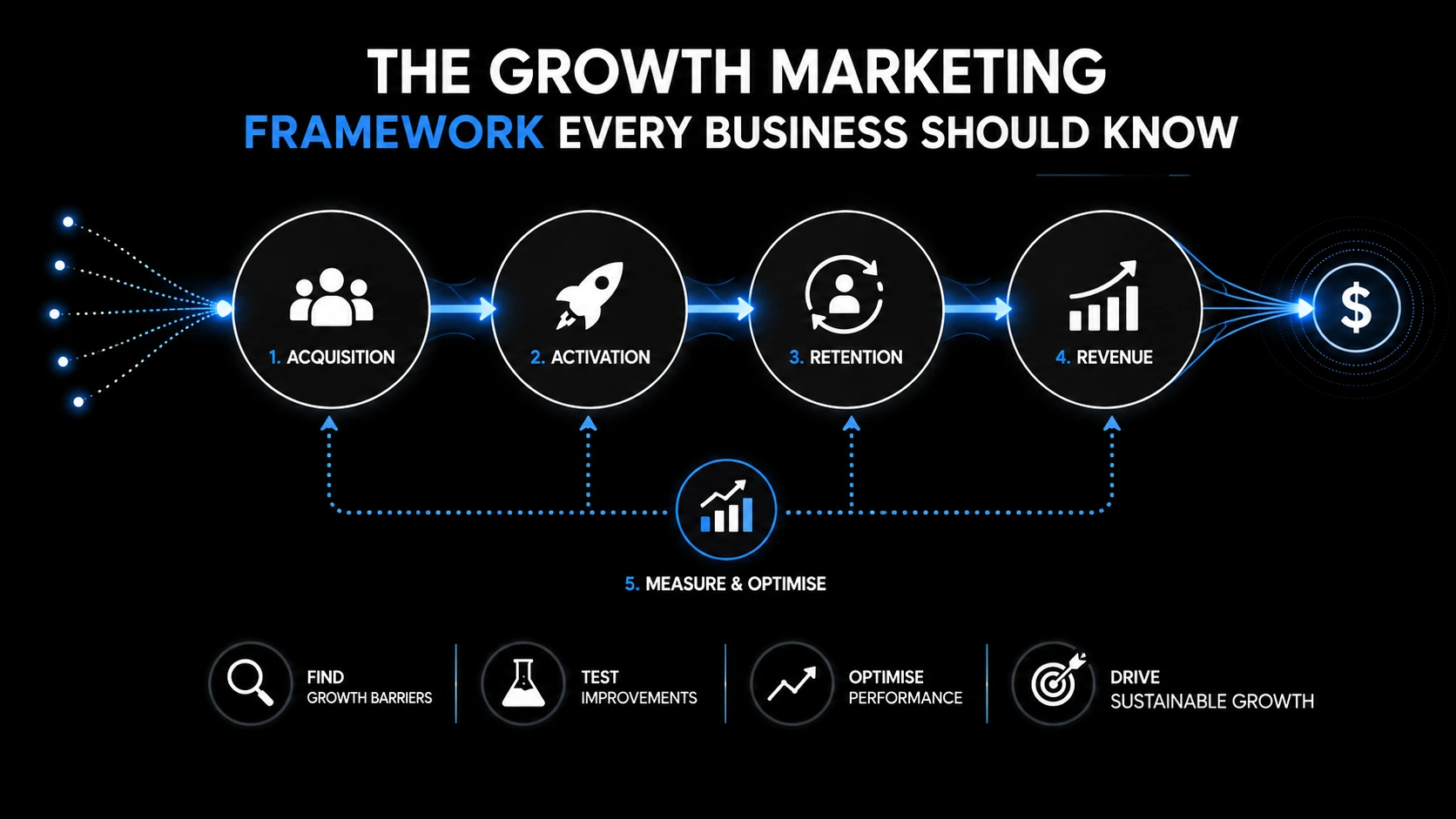
Growth doesn’t come from running more campaigns; it comes from knowing what to improve, why it matters, and how to measure the result. That’s the value of a growth marketing framework: it connects everyday marketing activity to real business outcomes instead of chasing traffic or engagement for its own sake.
A solid framework looks at the whole customer journey, starting with acquisition: how the right people find your business through SEO, content marketing, paid ads, email, or referrals. But traffic alone isn’t the goal. If visitors don’t take action, more traffic means more missed opportunities.
That’s where activation comes in: the moment a potential customer sees real value in what you offer, whether that’s booking a call, starting a trial, or making a purchase. Improving your conversion rate and landing page experience often delivers better results than simply spending more to attract visitors in the first place.
Next is retention, a stage many businesses underrate. Growth shouldn’t depend on constantly replacing customers; it should come from giving existing ones enough reason to stay, renew, and keep buying. Smart retention strategies and personalized communication raise customer lifetime value and make every future marketing dollar go further.
The framework also covers referral and revenue. Happy customers become a reliable source of new business through reviews and word of mouth. Still, none of it counts unless it’s tied back to real numbers: conversion rate, customer acquisition cost, lifetime value, and retention rate.
The real power of a growth marketing strategy is the feedback loop: review the data, find where customers drop off, test one change, measure it, keep what works. That habit turns marketing into a repeatable business growth strategy instead of a string of disconnected efforts.
Final Thoughts
A growth marketing framework helps you make better decisions. Instead of chasing the latest trending channel, find where growth is actually blocked, fix it with measurable tests, and let results guide your next step. When acquisition, activation, retention, and revenue work as one system, marketing becomes far more efficient and sustainable.
Frequently asked questions
What is a growth marketing framework?
How is it different from traditional marketing?
Why does retention matter for growth?
Which metrics matter most?
Is this approach right for small businesses?
Want to discuss something similar for your team?
Book a strategy call