
Digital Marketing
The Digital Marketing Funnel Is Broken When Your Channels Don’t Talk to Each Other
September 28, 2026 · 2 min read · by qcvimarketing@qcverify.com
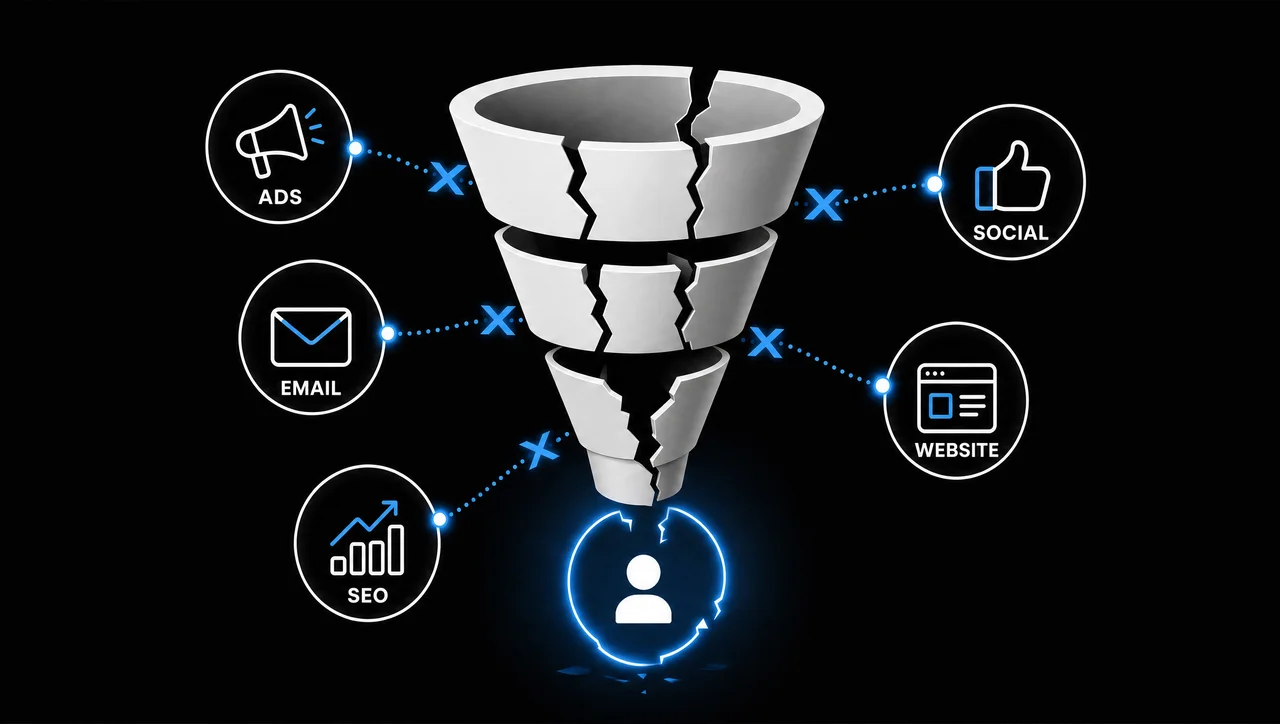
Most marketing teams do not have a channel problem. They have a handoff problem.
A customer clicks a paid ad, lands on a page that does not match the ad, leaves, and later finds the brand through Google. The SEO team sees organic traffic. The paid media team sees a click. The CRM records a new contact. Nobody sees the complete journey.
That is how a digital marketing funnel starts leaking.
Why disconnected marketing channels hurt the funnel
Every channel has a job, but those jobs overlap. Paid search can create immediate demand. SEO can capture people who are already researching. Content can answer questions before someone is ready to buy. Email and CRM campaigns can bring prospects back when the timing is better. The problem starts when each team measures its own piece without sharing what happens next.
A paid campaign may produce a low cost per lead, but if those leads rarely become qualified opportunities, the campaign isn't doing the job the business needs. The same applies to SEO traffic. High visitor numbers mean little if the landing experience does not move the right visitors toward a conversion.
A connected marketing funnel gives each channel access to useful information from the others. Search data can influence content. Paid ad results can reveal which messages deserve more testing. Landing page behavior can show where prospects lose interest. CRM data can tell marketers which leads actually become customers.
That feedback shapes what you do next.
Your landing page should know where the visitor came from
One of the easiest signs of a disconnected funnel is a generic landing page. Someone searches for a specific service, clicks a highly relevant ad, and lands on a page that talks about the company instead of answering why they clicked.
The gap is small on paper. In practice, it can change conversion rates. Your website, paid media, analytics, CRM, and conversion tracking should work from the same customer journey. That means the ad message should make sense on the landing page, the conversion should be recorded correctly, and the resulting lead should carry enough information into the CRM for the sales team to understand its source.
The fix starts with shared data.
You don't need more channels just because another platform is available. You need better communication between the channels already generating attention. A useful digital marketing strategy connects acquisition data with website behavior, conversion data, and customer outcomes. That makes it easier to see which campaigns create real business value rather than stopping at clicks, impressions, or form submissions. A funnel should tell one continuous story. If your paid media says one thing, your landing page says another, and your CRM tells a third story, the customer has to connect the dots. Most will not.
Final Thoughts
A healthy digital marketing funnel is built around continuity. The ad, search result, content, landing page, tracking system, and follow-up should make sense as parts of the same customer journey. When your channels share information, every campaign can teach the next one something useful. When they operate in isolation, you end up optimizing reports instead of the customer journey.
FAQ
Frequently asked questions
What is a digital marketing funnel?
Why should marketing channels work together?
What happens when marketing channels are disconnected?
How can businesses connect their marketing funnel?
Next step
Discuss this for your team
Book a strategy call and we'll apply this thinking to your accounts.