
SEO vs Google Ads for Mortgage Lead Generation: Which Delivers Better ROI?
September 9, 2026 · 2 min read · by qcvimarketing@qcverify.com
SEO and Google Ads serve different roles in mortgage lead generation. Compare their speed, investment, lead quality, and long-term value to understand how both channels can contribute to growth.
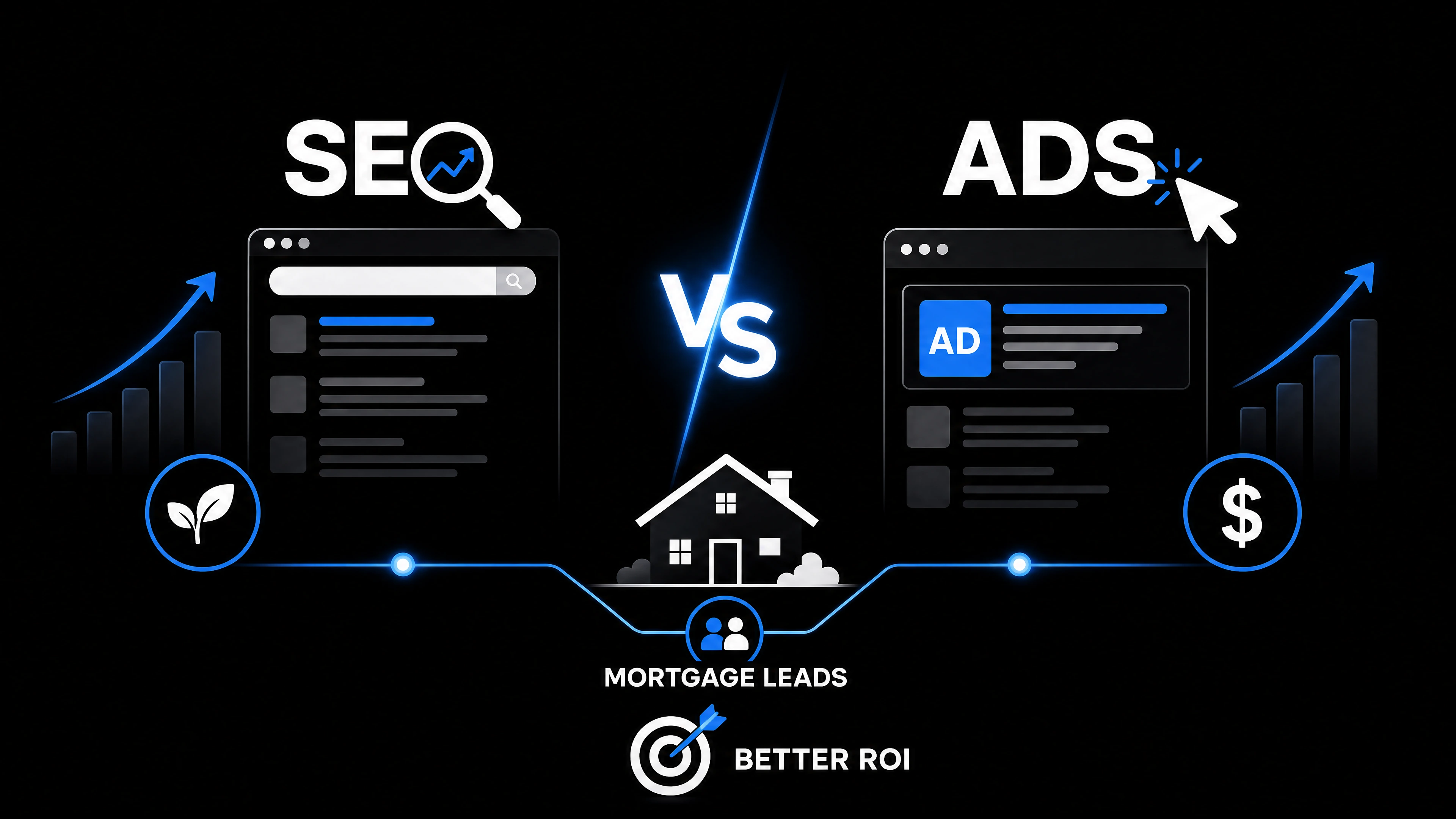
When a mortgage company wants more leads, one of the first decisions is usually where to put the marketing budget. Should the focus be on mortgage SEO, which builds visibility through organic search, or Google Ads, which puts the company in front of potential borrowers immediately? The answer depends less on which channel is “better” and more on what the company needs from its lead-generation strategy.
Google Ads has one obvious advantage: speed. A mortgage company can create a campaign around searches such as “mortgage lender near me” or “FHA home loan lender” and start reaching people actively looking for financing. This makes Google Ads useful when the goal is to generate inquiries quickly. However, every click costs money, and the campaign needs ongoing management to maintain performance. Mortgage advertising must also follow Google’s financial advertising requirements and applicable local regulations.
SEO works differently. Instead of paying for each visitor, a mortgage company builds visibility by creating useful content and optimizing its website for searches borrowers make throughout their research. Someone searching for “FHA loan requirements” or “mortgage options for self-employed borrowers” may not be ready to apply today, but that person could become a valuable prospect later. A strong mortgage SEO strategy allows the company to stay visible during that research process.
The difference becomes clearer when you look at the type of investment each channel requires. Google Ads generally provides faster feedback, while SEO takes time to build authority and organic visibility. But once SEO content begins attracting consistent organic traffic, those visits don't require payment for every click. That can make organic search increasingly valuable as a long term mortgage customer acquisition channel.
Another factor often gets overlooked: conversion quality. A campaign producing a low cost per lead may look successful until you discover that very few leads complete an application. The more useful measurement is what happens after the inquiry. Track qualified mortgage leads, applications, approvals, funded loans, and customer acquisition cost to understand the real mortgage marketing ROI.
For many mortgage companies, the strongest approach is not choosing one and abandoning the other. Google Ads can capture immediate demand while SEO builds a sustainable source of organic traffic. Paid search data can also reveal which borrower questions and services generate interest, giving the content strategy useful direction.
Final Thoughts
SEO and Google Ads serve different purposes in mortgage lead generation. Google Ads can help capture existing demand quickly, while SEO can build an organic acquisition channel that continues working over time. If the goal is sustainable growth, the better question is not “SEO or Google Ads?” but “How can both channels contribute to qualified leads and funded loans?”
The right choice should ultimately be based on lead quality, conversion rates, acquisition costs, and revenue, not traffic numbers alone.
Frequently asked questions
Is SEO or Google Ads better for mortgage lead generation?
How long does mortgage SEO take to generate leads?
Are Google Ads expensive for mortgage companies?
How should mortgage companies measure SEO and Google Ads ROI?
Can mortgage companies use SEO and Google Ads together?
Want to discuss something similar for your team?
Book a strategy call