
B2B Lead Generation
Lead Scoring for B2B Businesses: Identifying Sales-Ready Prospects
November 23, 2026 · 3 min read · by qcvimarketing@qcverify.com
Discover how B2B businesses can evaluate prospect quality using fit-based and behaviour-based scoring. Learn how to build a useful lead scoring model, prioritize sales follow-ups and avoid common mistakes.
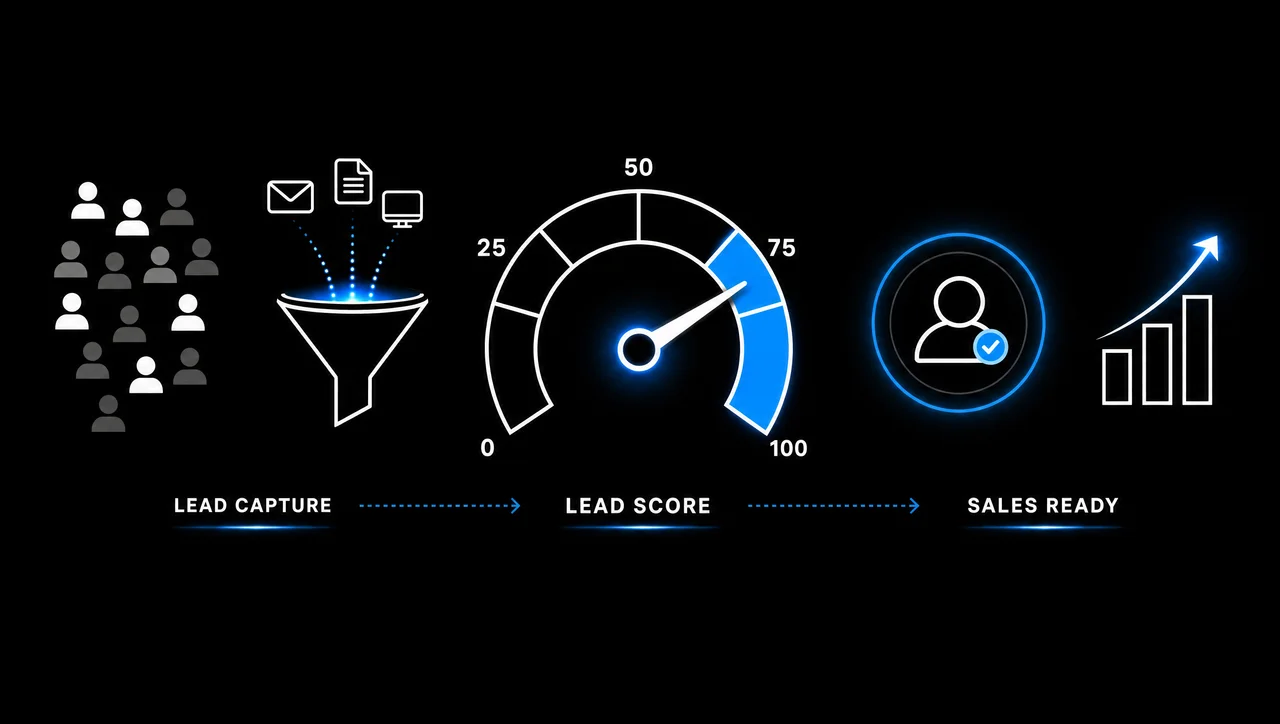
A sales team gets 40 new leads in a week. Some have visited the pricing page multiple times, while others have only picked up the general industry guide and never come back. If you give every contact the same follow-up, you’ll waste a huge amount of sales time. Lead scoring helps you determine which prospects are worth your time first.
In a Nutshell
B2B lead scoring assigns a score to a prospect based on their business profile and interactions with your company. It helps the marketing team identify the most promising leads and gives the sales team a clearer picture of who might be ready to talk.
What is B2B lead scoring?
Lead scoring is the process of scoring leads according to how well they match your ideal customer and how much interest they have in your product/service.
A company selling enterprise software might give a higher score to a decision-maker from a 500-person business than to someone who’s just researching the subject for the sake of it. Most scoring systems use two broad categories.
1. Fit-Based Scoring
This measures how well a prospect matches the company’s target audience. Factors can include:
● Job title and seniority ● Company size ● Industry ● Business location ● Available budget or purchasing authority
A marketing director in the relevant industry could score higher than an intern at a company outside the market.
2. Behaviour-Based Scoring
This is about what a prospect does after they’ve interacted with the business. Visiting a pricing page, requesting a product demo, or replying to an email are all indicators of more serious buying interest.
Someone who downloads multiple resources is likely doing research. Someone who requests a consultation is clearly indicating they want to speak to a provider.
How to Build a Useful Lead Scoring Model
Start with your existing customer data. Look at the leads that have become paying customers and see what they have in common. What were their job titles? What type of companies were they in? What had they done on your site previously? That’s the basis on which you can build your scoring criteria.
Assign points to each action based on its relevance. You can also deduct points for actions which suggest a poor fit (e.g. an irrelevant job title, an email address which is associated with a student account).
Set a threshold for sales follow-up, then review it with the sales team. If contacts with high scores are very rarely going to be opportunities, then the model is going to need tweaking.
Common Lead Scoring Mistakes
Giving too many points for email opens can skew a prospect’s score, since an open doesn’t necessarily equate to buying interest. There’s also the issue of running a scoring model for months on end without ever checking whether it still reflects actual sales outcomes.
Marketing and sales should jointly assess lead quality. A CRM can track scores, log all interactions, and alert the sales team when a lead hits the agreed threshold.
Final Thoughts
A good lead scoring model should make the sales team’s day easier. If the sales team still end up having to go out and investigate every single high-scoring contact, then the model needs reworking. Judge the model on the quality of the conversations it generates, not simply the number of leads it scores.
FAQ
Frequently asked questions
What is a good lead score?
How frequently should lead scores be reviewed?
Next step
Discuss this for your team
Book a strategy call and we'll apply this thinking to your accounts.