
Marketing Analytics & Performance Marketing
How to Turn Marketing Data Into Decisions Instead of Monthly Reports
October 5, 2026 · 2 min read · by qcvimarketing@qcverify.com
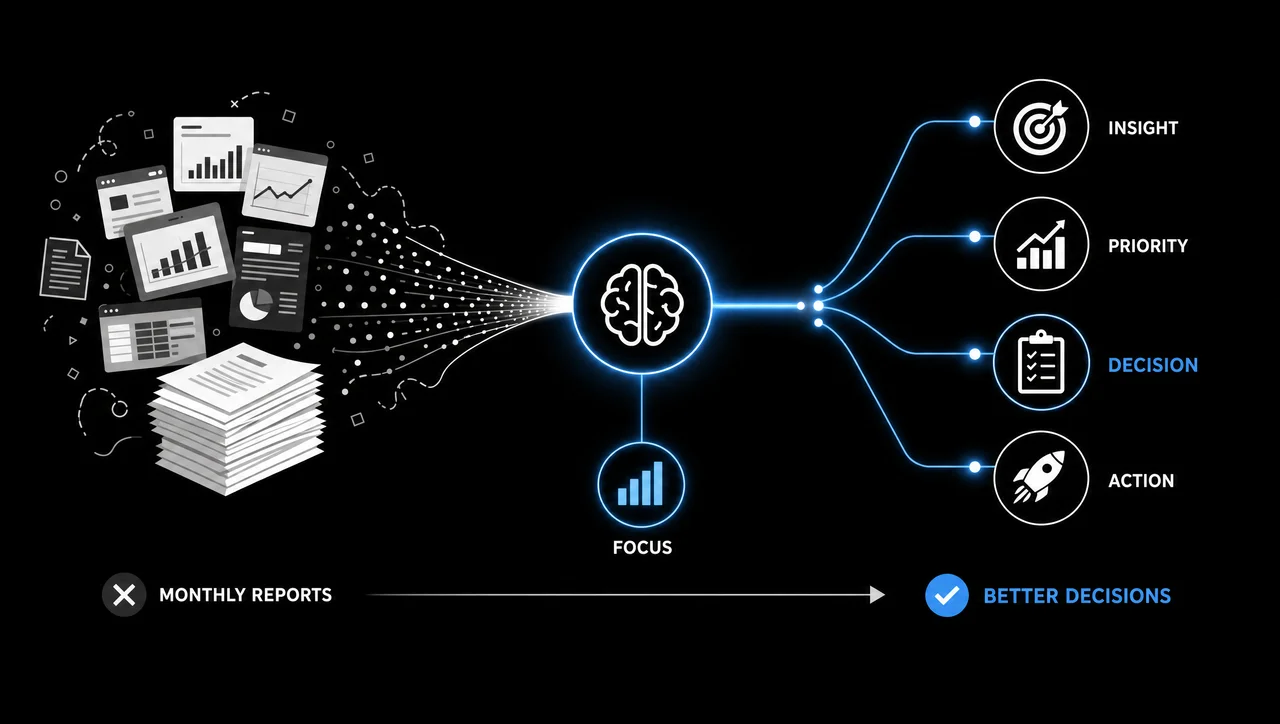
A marketing report can tell you that conversions fell 12% last month. It cannot tell you what to do about it. That is where many marketing teams get stuck. They have dashboards full of campaign performance data, customer acquisition numbers, conversion rates, and marketing ROI figures, yet the next decision still comes down to a meeting and a guess. The useful part of marketing data starts after the report is finished.
Give Your Data a Question to Answer
Before opening Google Analytics or a paid media dashboard, decide what you are trying to answer. Should the budget move from one campaign to another? Is a landing page wasting otherwise good traffic? Has customer acquisition become too expensive? Are sales falling because fewer people are clicking, or because more visitors are dropping out before purchase?
Those questions give your data a job.
For example, a campaign with a strong click-through rate may look healthy in a monthly report. But if those clicks produce weak conversion rates and expensive customers, increasing its budget makes little sense. Looking at the full path from acquisition to conversion gives you a very different answer.
Connect Metrics to Money
Marketing performance metrics become more useful when they are tied to commercial results.
Revenue, contribution margin, customer acquisition cost, and conversion rate often tell a more useful story together than any single channel metric. A lower cost per click is not automatically a win. A higher return from one channel may also hide weak performance elsewhere in the funnel.
This is why performance marketing needs measurement that reaches beyond platform dashboards. The question should be what happened to the business after the campaign ran.
Look for Changes, Not Just Numbers
A monthly report is a snapshot. Decisions need context.
Compare periods, campaigns, audiences, landing pages, and customer behavior. If conversion rates dropped, find out where the drop began. If revenue increased, check what actually caused it. Was it more traffic, a better offer, higher order value, or a change in the customer mix? That is where website and funnel development and conversion data become useful. A problem that seems like a media issue may actually start after the click.
Make the Next Action Obvious
Every important finding should lead to a decision. Pause it. Test it. Move budget. Change the offer. Fix the page. Keep watching.
If a report ends with ten charts and no clear action, the analysis is unfinished.
Good marketing analytics should make the next move easier to see, not create another document for someone to read at the end of the month.
Final Thoughts
Marketing data becomes valuable when it changes what you do next. Reports explain what happened. Better analysis connects those results to a business decision. The goal is not to collect more numbers. It is to know which numbers deserve attention, what they reveal about the customer journey, and when the evidence is strong enough to act.
FAQ
Frequently asked questions
What is data-driven marketing?
Which marketing metrics should businesses track?
How can marketing data improve campaign performance?
Next step
Discuss this for your team
Book a strategy call and we'll apply this thinking to your accounts.