
Mortgage Marketing / Marketing Analytics
How to Measure Marketing ROI for a Mortgage Brokerage
November 9, 2026 · 2 min read · by qcvimarketing@qcverify.com
Generating enquiries is not the same as generating mortgage business. Discover how brokerages can connect marketing spend with funded loans, compare acquisition channels and understand which activities contribute to revenue.
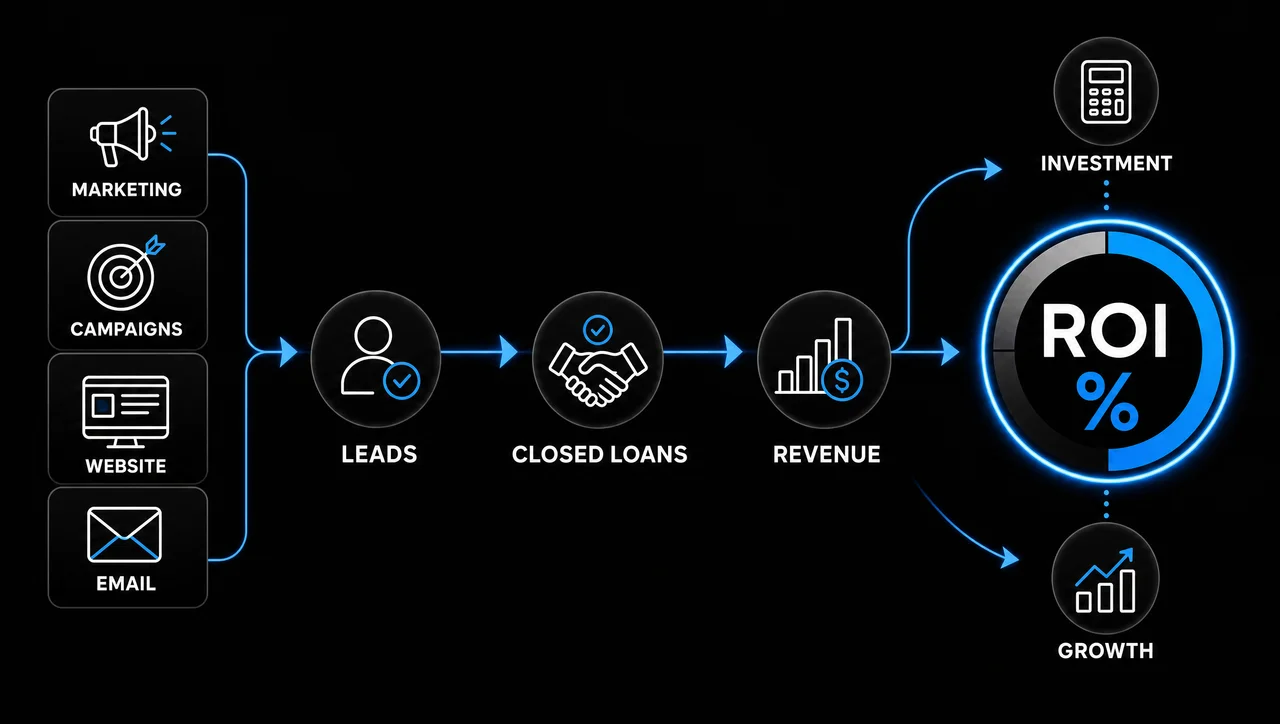
A mortgage brokerage can generate enquiries every week and still struggle to understand which marketing activities are bringing in actual business. Google Ads may produce regular form submissions, social media may attract website visitors, and referrals may bring fewer but more serious borrowers. Looking at these channels separately does not tell you whether the overall marketing investment is paying off.
Measuring marketing ROI for a mortgage brokerage requires connecting advertising costs with the loans that eventually get funded. That means looking beyond clicks and enquiries to understand how much business each marketing channel brings in.
Track Revenue From Completed Mortgage Loans
The first step is to work out how much revenue your broker makes from clients generated by marketing. A submitted enquiry is not in itself income. Some of the borrowers will not meet the lending criteria, some will go to a different broker, and some applications will simply never close.
For accurate mortgage marketing ROI, you need to track the commission or revenue you make on the loan that you’ve actually closed. Link that to your CRM and LOS to see where each client came from.
This gives you a much clearer picture of which marketing sources are driving funded loans, not just generating interest.
Track the Journey From Enquiry to Closing
A campaign might generate many cheap leads but very few actual applications. Another might be more expensive per enquiry but attract the type of borrower who will go ahead and apply.
Track cost per qualified mortgage lead, cost per consultation booking, cost per application, cost per approval and cost per funded loan conversion. That will tell you where the potential client is dropping off.
A proper mortgage marketing and attribution system will link campaign performance to the later stages of the lending process.
Compare Channels Before Changing Budgets
Look at Google Ads, organic search, social and referral marketing separately. Give each channel sufficient time to generate some real outcomes, particularly as it can take borrowers several weeks or months to complete a mortgage application.
Use consistent attribution rules and compare across similar time periods. This stops a channel from getting credit for a loan simply because it generated the final website visit.
Final Thoughts
A mortgage broker should be aware of which of their marketing spend is actually generating funded loans and which is just eating into the budget without producing any business at all. Cost per lead has its uses but doesn’t tell the whole story. If you can link your marketing spend to actual lending outcomes, you can adjust your spend more easily, improve acquisition costs, and make better marketing decisions.
FAQ
Frequently asked questions
What would be a good marketing ROI for a mortgage brokerage?
What metrics should mortgage brokers be tracking?
How can a mortgage broker track leads from various channels?
Next step
Discuss this for your team
Book a strategy call and we'll apply this thinking to your accounts.