
Digital Marketing Strategy
How to Know When Your Business Has Outgrown DIY Digital Marketing
October 21, 2026 · 2 min read · by qcvimarketing@qcverify.com
As your business grows, managing digital marketing yourself can become harder to sustain. Learn the signs that your marketing workload, campaign performance, and need for specialist skills may require a different approach.
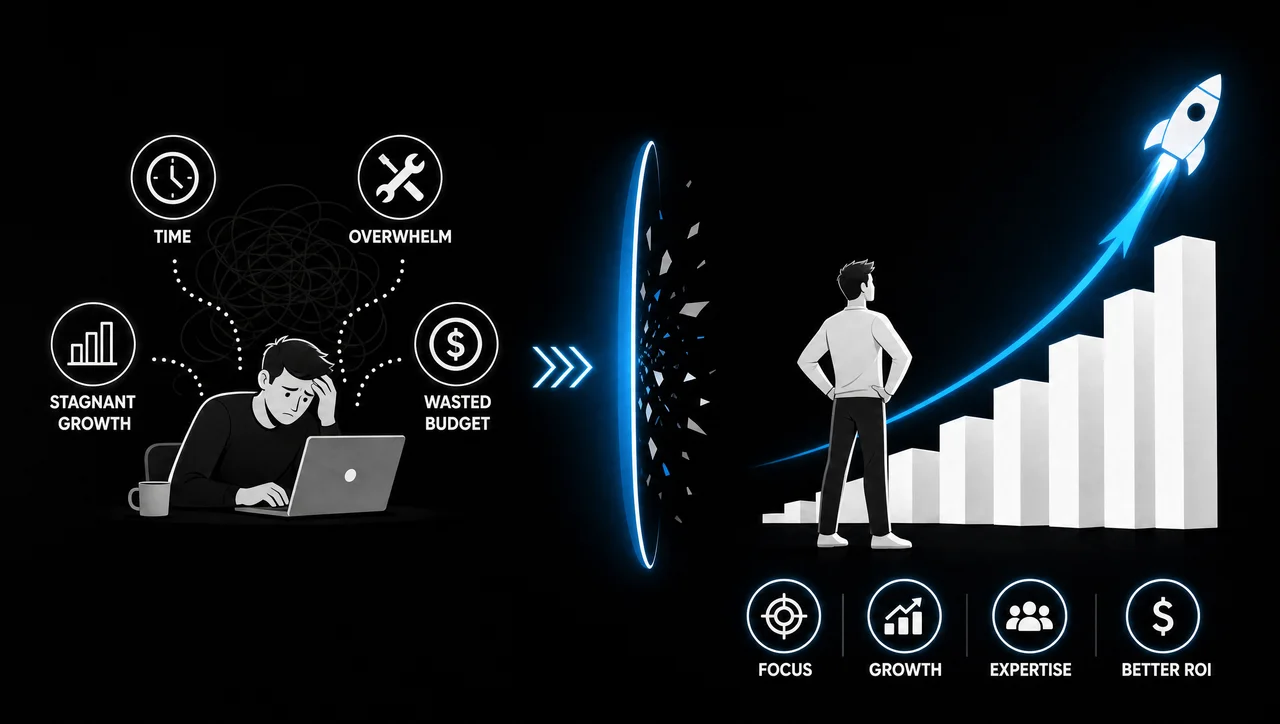
At first, handling your own marketing can be a sensible choice. You know your customers, you can write about your products, and setting up a basic advertising campaign is easier than it used to be. The trouble starts when the business gets busier, but the marketing still depends on whatever time you have left at the end of the day.
There are a few signs worth paying attention to before you spend more money trying to fix the problem.
You Keep Postponing Important Marketing Work
Think about the tasks you planned to finish last month. Perhaps you wanted to update old website pages, review your ad results, or send emails to customers who had already shown interest. Then an order issue, a staff problem, or a customer deadline took priority. Occasionally, this is normal. When it happens every week, your marketing becomes reactive. Campaigns run without much review, website improvements remain unfinished, and new ideas never get tested. The issue is not that you lack commitment. Running a business already demands your attention. Marketing that needs several hours of focused work each week may no longer fit comfortably around everything else.
You Know the Numbers, but Not What They Mean
You might know how many people visited your website last month or how much you spent on ads. But can you tell which activity brought in customers who actually bought something?
For example, a campaign could generate twenty enquiries, yet most may come from people who cannot afford your service. Another campaign might bring only eight enquiries, with five becoming paying customers. Looking at enquiry volume alone would give you the wrong impression. As your marketing grows, tracking lead quality, conversion rates, and customer acquisition cost becomes increasingly important. Without reliable data, deciding where to put your next dollar is largely a guess.
Every New Channel Creates More Work
Your business may have started with Facebook posts and occasional paid ads. Now you are considering SEO, email marketing, landing page improvements, and automated follow-ups. Each one adds another set of tasks to an already crowded schedule.
You do not need to outsource everything. You might continue creating social content yourself while getting specialist help with SEO, paid media, and conversion-focused services. The useful question is which activities require expertise or attention you cannot realistically provide.
Spending More Has Not Solved the Problem
If advertising costs are rising but sales remain flat, increasing the budget may only make an existing problem more expensive. The audience could be wrong, the offer may not be convincing, or visitors may be leaving your website before completing an enquiry. Find out where potential customers are dropping away before committing more money. An experienced marketer should be able to investigate the numbers and explain which changes are worth testing.
Final Thoughts
DIY digital marketing stops being practical when you can no longer give important tasks the attention they need, or when you are spending money without understanding the return. You do not have to hand over every channel to someone else. Start with the part of marketing that is consuming the most time or producing the least useful information.
FAQ
Frequently asked questions
Is DIY digital marketing suitable for small businesses?
When should I hire a digital marketing agency?
Should I outsource all my marketing?
Next step
Discuss this for your team
Book a strategy call and we'll apply this thinking to your accounts.