
Mortgage Marketing / Lead Generation
How to Identify Lead Quality Problems Before Increasing Mortgage Ad Spend
November 6, 2026 · 2 min read · by qcvimarketing@qcverify.com
More mortgage enquiries do not always mean better campaign performance. Learn how to assess lead quality, identify targeting problems and evaluate qualified prospects before increasing advertising spend.
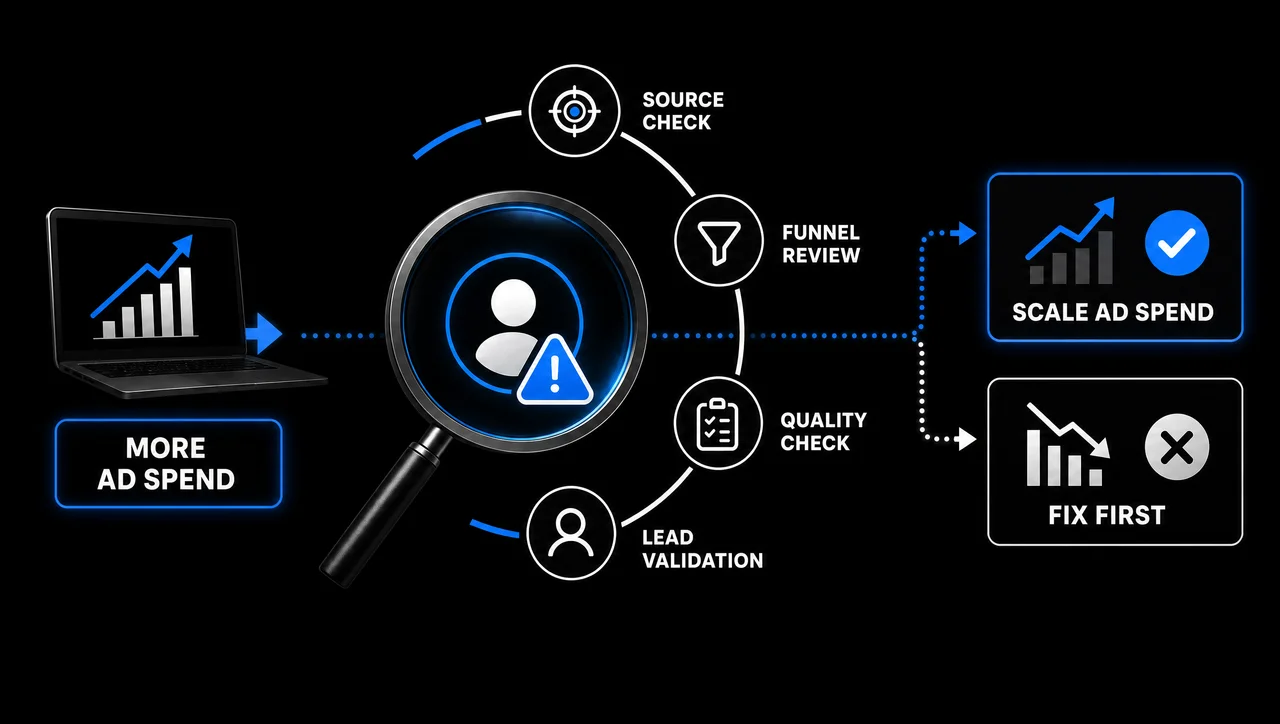
Before adding more money to a mortgage advertising campaign, check what happened to the enquiries it already generated. If loan officers struggle to reach borrowers or find that most enquiries don't match the lending criteria, a bigger budget will only bring more of the same.
The problem is often hidden behind a healthy-looking lead report. A campaign may generate plenty of form submissions, but that does not tell the marketing team whether those people are interested in the advertised loan product or ready to speak with a lender.
Check Why Enquiries Are Not Moving Forward
Start with the leads that never reached a proper conversation. Ask the sales team what happened when they tried to contact them.
Some people may have entered the wrong phone number. Others might have been looking for a different loan product or live outside the lender’s service area. These are different problems, and each needs a different response.
If several enquiries from the same advertising campaign have similar issues, check its keywords and ad copy. A broad search term may attract people researching mortgages rather than those looking for the service you offer.
Look at Who Is Filling Out the Forms
A mortgage enquiry should give the lending team enough information to understand what the borrower needs.
Consider a campaign promoting refinancing. If most submissions come from people looking to buy their first home, the campaign is reaching an audience that doesn't match its purpose.
Review loan purpose, property location and expected timeframe. These details can help identify whether the right people are responding. Keep the enquiry form simple, though. Asking for too much information before an initial conversation can put visitors off.
Compare the Cost With the Actual Results
A $30 mortgage lead may appear cheaper than a $55 lead from another campaign. But suppose the cheaper campaign generates 100 enquiries and only 10 qualified prospects, while the more expensive campaign generates 50 enquiries and 20 qualified prospects.
The second campaign is bringing in suitable leads at a lower cost per qualified lead.
This is why mortgage marketers should track contact rate, qualification rate, application rate and cost per qualified lead alongside cost per lead (CPL). These numbers show whether advertising spend is reaching people who can move further into the lending process.
Ask Loan Officers What They Are Seeing
Marketing reports cannot explain every failed enquiry. Loan officers speak directly with borrowers and often notice problems that advertising data misses.
Review CRM records with the sales team. Are people confused about the advertised loan product? Are you contacting qualified enquiries too late? Are certain campaigns repeatedly attracting unsuitable borrowers?
Record these reasons instead of marking every unsuccessful enquiry as lost. The difference can point towards a problem with targeting, messaging or follow-up.
Final Thoughts
A mortgage campaign should not receive a bigger budget simply because it generates more enquiries. First, check whether those enquiries turn into useful conversations and applications. Fix the source of poor quality leads before increasing spend. That gives lenders a much clearer basis for deciding where their advertising money should go.
FAQ
Frequently asked questions
What causes poor quality mortgage leads?
How can lenders measure mortgage lead quality?
Should lenders stop a campaign with poor quality leads?
Next step
Discuss this for your team
Book a strategy call and we'll apply this thinking to your accounts.