AI Marketing / Marketing Analytics
How AI-Powered Predictive Analytics Can Identify High-Intent Customers
November 20, 2026 · 2 min read · by qcvimarketing@qcverify.com
Not every website visitor is ready to buy. Discover how predictive analytics evaluates customer activity, identifies buying signals and helps sales teams prioritise prospects based on their likelihood of converting.
A visitor looks at the pricing page on the company’s website on Monday. They return two days later to compare offerings and download the product guide. Another visitor reads one blog post and is done. All three appear in analytics, but their interest in actually buying is very different.
Marketing teams are often unsure which visitors to pursue. AI-driven predictive analytics can help by reviewing customer activity history and identifying the behaviour associated with both enquiries and purchases.
How Predictive Analytics Reads Customer Behaviour
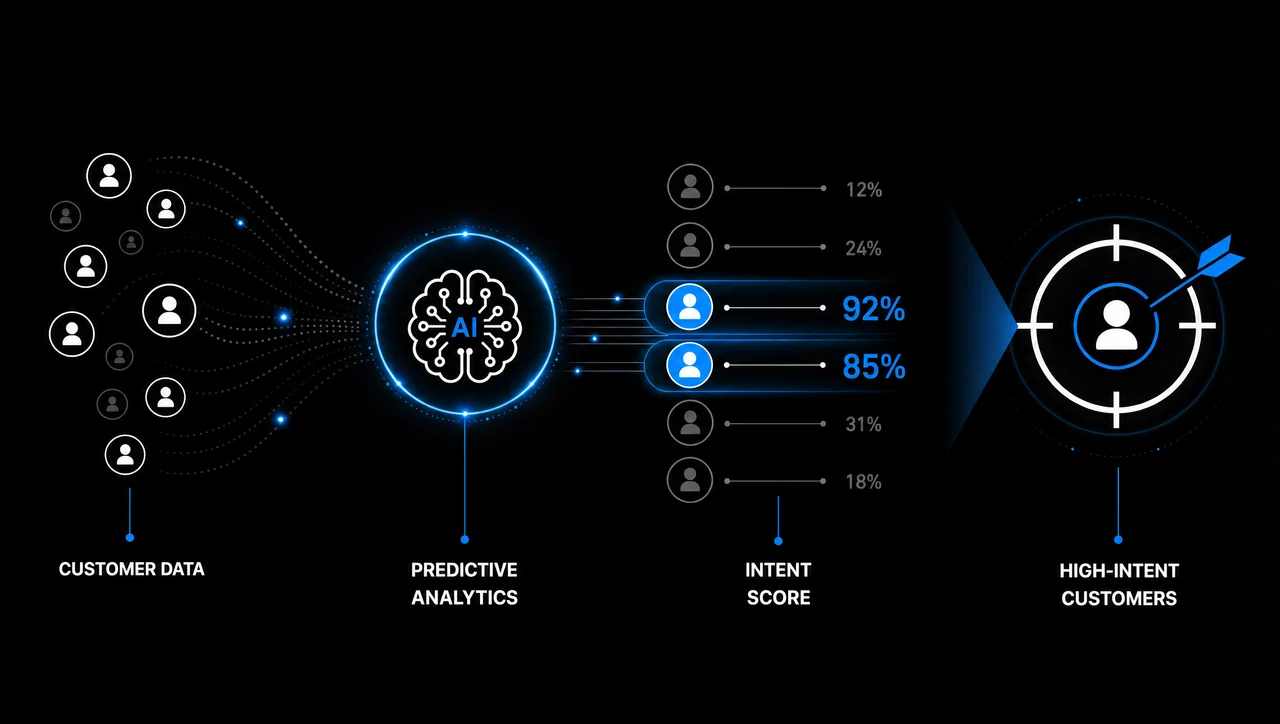
A predictive model looks at what people did before making a purchase and compares that with the behaviour of current visitors. It may find that people who have previously returned to the pricing page or requested a product comparison are more likely to contact sales.
The data can be drawn from several sources: website visits, email clicks, past orders and CRM records. A software company, for instance, might find that people who look at two different subscription plans will quite often go on to request a demo.
The model uses those patterns to work out which of the current prospects are likely to be on the verge of making a decision.
Using Predictive Lead Scoring to Prioritise Prospects
Sales teams can’t give every enquiry the same level of attention. Predictive lead scoring helps them decide where to start.
A prospect that’s visited the service page multiple times and is in the target market would be worth a call. Someone who’s only picked up the beginner’s guide would probably be better served by an informative email first.
These scores are of course subject to change as people interact with the business. A lead who scored quite low last month could become a high-score prospect if they request a quote.
Poor Customer Data Can Affect Predictions
Data quality matters. Missing purchase records, duplicate CRM records and incorrect website event tracking can all lead to a misleading score.
Before you go and start relying on the predictions you’ve got, you need to check that your analytics and your CRM are actually recording the customer activity. You also need to validate the predictions against actual sales.
For example, if high-scoring leads rarely become qualified opportunities, the model is likely relying on the wrong signals. The marketing team would need to look at those results and either adjust the data or the scoring methodology.
When that same AI marketing automation is in play, these findings can also be used to determine when a prospect is ready for a follow-up.
Final Thoughts
A high-intent lead can still go the other way. Predictive analytics can help the marketing team to work out who is most likely to be ready for a conversation, but the sales outcome is down to what happens after that. The scores should inform the decision, not dictate it.
FAQ
Frequently asked questions
What is predictive analytics in marketing?
How does AI identify high-intent customers?
What is predictive lead scoring?
Next step
Discuss this for your team
Book a strategy call and we'll apply this thinking to your accounts.