
Digital Marketing Strategy
How Agencies Can Build a Marketing System That Scales With Client Growth
October 16, 2026 · 2 min read · by qcvimarketing@qcverify.com
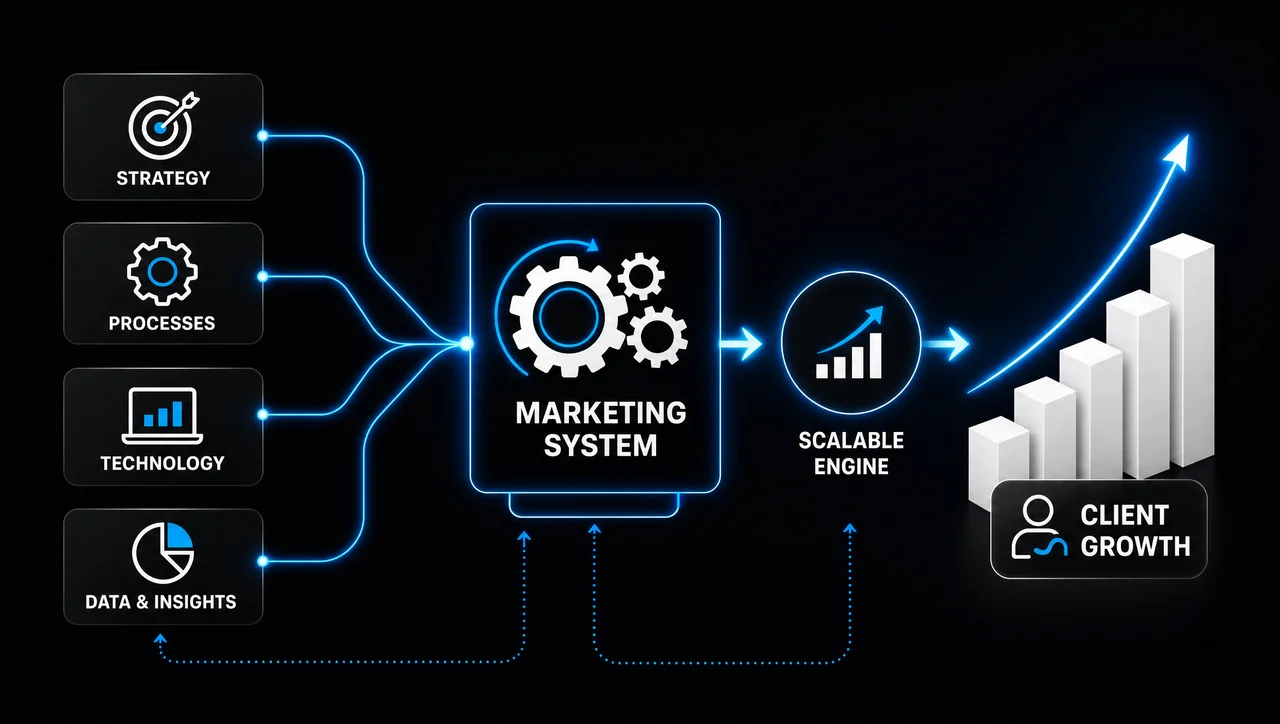
An agency can manage five clients with a few spreadsheets, regular team calls and a shared calendar. Add ten more clients, and those same habits can start causing problems. Reports arrive late, campaign details get lost in messages, and account managers spend more time chasing updates than helping clients improve results.
This is where a marketing system becomes necessary. Agencies need a way to handle more work without making every new client another reason the team stays late.
Give Every Client a Clear Process
A new client should not mean starting from scratch. The agency needs a consistent process for onboarding, setting goals, collecting account access, approving campaigns and reviewing performance.
Create a standard onboarding process, but leave room for differences between clients. An ecommerce brand tracking customer acquisition cost will need different reporting from a local business focused on qualified enquiries. The steps can stay consistent. The campaign goals and measurements should reflect the client’s business.
Connect Campaign Data to Business Results
Agencies often use separate platforms for paid advertising, SEO, analytics and customer relationship management. The problem starts when each platform tells a different part of the story, and nobody brings the numbers together.
A shared reporting system should show which channels attract visitors, which generate enquiries or sales, and what those conversions are worth. For ecommerce clients, that may include customer acquisition cost and marketing efficiency ratio. For lead generation, it could mean qualified leads and cost per acquisition.
This gives account managers better information for client conversations. They can explain what needs attention instead of simply presenting a collection of charts.
Reduce Repeated Work Before Hiring More People
If team members manually prepare the same report every month or copy lead details between tools, the agency spends time on predictable, repetitive work.
Marketing automation can handle routine tasks such as reporting alerts, lead assignment, and follow-up reminders. Templates can also speed up campaign briefs and client updates.
Automation still needs supervision. A poorly configured workflow can send the wrong message or assign a valuable lead to nobody. Test each process before relying on it across multiple accounts.
Make Ownership Clear as the Team Expands
Growth creates confusion when several people assume someone else is responsible. Every campaign needs a clear owner, approval process and deadline.
Document the work that currently depends on one person remembering every detail. That knowledge should be available to the team, especially when someone is away or a new account manager takes over. Review the system when recurring delays appear. A process that worked for a small team may need changing once specialists, account managers, and analysts handle different parts of the same campaign.
Final Thoughts
A marketing system should make client growth easier to manage, not add another layer of administration. Start with the task that causes the most repeated work or missed deadlines, fix it, then apply the improvement across suitable accounts. As the agency grows, the goal is to make good work repeatable without treating every client as identical.
FAQ
Frequently asked questions
What is a marketing system for an agency?
Which marketing automation tools do agencies need?
How can agencies manage more clients without increasing workload?
When should an agency improve its marketing processes?
Next step
Discuss this for your team
Book a strategy call and we'll apply this thinking to your accounts.