
Conversion Rate Optimization (CRO)
From Click to Customer: How to Find Revenue Leaks in Your Marketing Funnel
September 30, 2026 · 2 min read · by qcvimarketing@qcverify.com
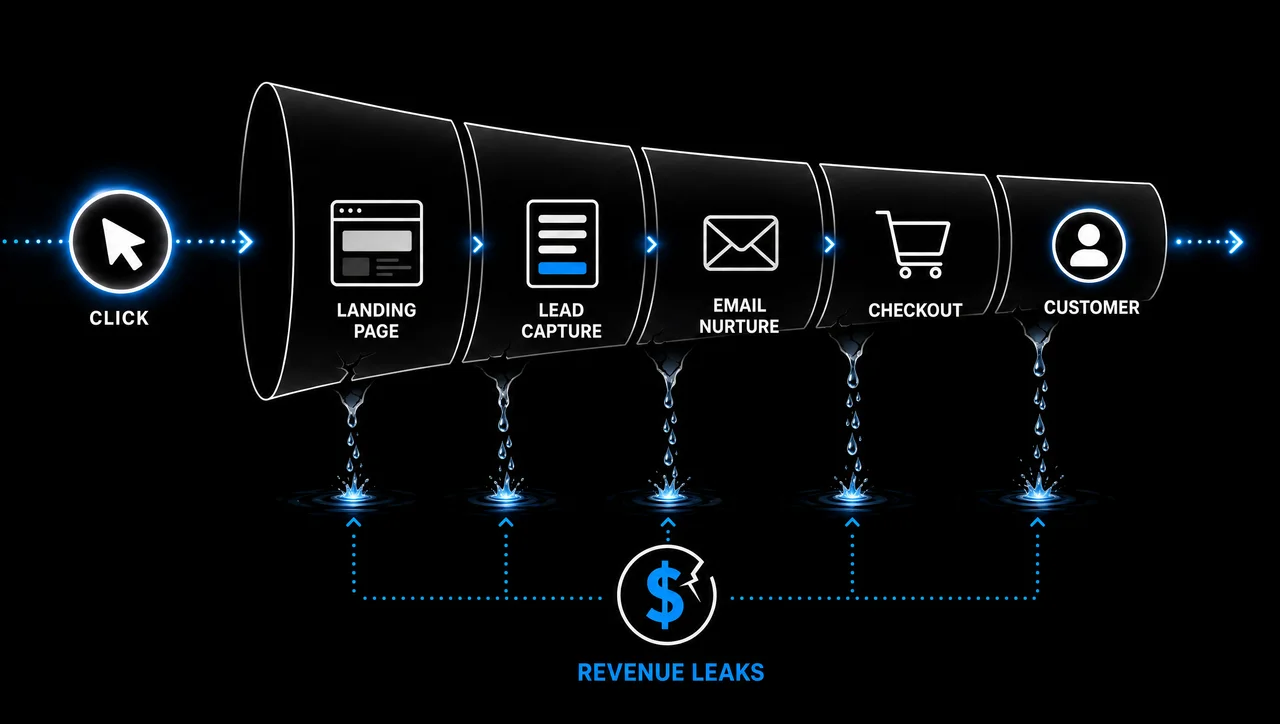
You paid for the click. The visitor arrived. Then nothing happened.
That is where many marketing teams start looking at the wrong number. They see traffic, impressions, and clicks going up and assume the campaign is working. But if those visitors don't turn into leads or customers, some of the money going into the funnel disappears before it reaches the bottom. That missing revenue is often easier to find than people expect.
Where Does the Money Actually Disappear?
Think about the path a customer takes after seeing your marketing. They click an ad, reach a landing page, read the offer, perhaps fill out a form or add something to their cart, and eventually decide whether to buy. A leak can happen at any of these points. You might have a landing page that gets plenty of visits but very few inquiries. You might have hundreds of leads, yet only a small number become customers. An ecommerce store may get shoppers as far as checkout before a large share leaves without paying. The numbers tell you where the leak is. Customer behavior usually tells you why.
Find the Gap Between Each Funnel Stage
Instead of asking, “Why aren’t we getting more conversions?” ask a narrower question:
Where are people stopping?
Compare the number of visitors reaching each funnel stage. If 10,000 people reach a page but only 300 take the next step, that gap deserves attention. If people submit forms but rarely reach sales, moving more traffic into the form will not solve the problem. This is where conversion-focused website development can matter. Sometimes the issue has nothing to do with the campaign. The page may be difficult to understand, the next step may be unclear, or the offer may not match what brought the visitor there.
Look for Mismatched Intent
One of the quieter revenue leaks comes from sending the wrong people to the right page. Someone searching for a specific product or service has a different intent from someone casually browsing. If your paid search, social campaigns, or SEO content attract people unlikely to buy, the funnel can look busy while revenue stays weak. That is why performance marketing needs to be judged beyond clicks and platform-reported returns. Look at customer acquisition cost, lead quality, conversion rate, and actual revenue together.
Fix the Leak, Then Measure Again
Once you find the weak point, fix it first.
A clearer landing page may solve one problem. A better offer may solve another. Sometimes the issue is followed up after a lead comes in. Sometimes tracking is wrong and makes a healthy funnel look broken. Make one meaningful change, then watch what happens to the numbers. This makes it easier to see whether the fix worked instead of changing five things and guessing which one made the difference.
Final Thoughts
Revenue leaks rarely announce themselves. They show up as small gaps between clicks, inquiries, purchases, and repeat customers. Finding those gaps gives you a much better starting point than simply spending more on traffic. The goal is simple: follow the customer far enough to see where interest turns into hesitation, and fix that point before buying more traffic.
FAQ
Frequently asked questions
What is a revenue leak in a marketing funnel?
What are common revenue leaks in marketing?
How can I identify a revenue leak?
Next step
Discuss this for your team
Book a strategy call and we'll apply this thinking to your accounts.