
Performance Marketing
Cost Per Lead vs Cost Per Funded Loan: Which Mortgage KPI Matters More?
November 2, 2026 · 2 min read · by qcvimarketing@qcverify.com
Generating more mortgage enquiries does not necessarily mean generating more funded loans. Discover how CPL, qualified leads, and cost per funded loan help lenders evaluate marketing effectiveness and make better budget decisions.
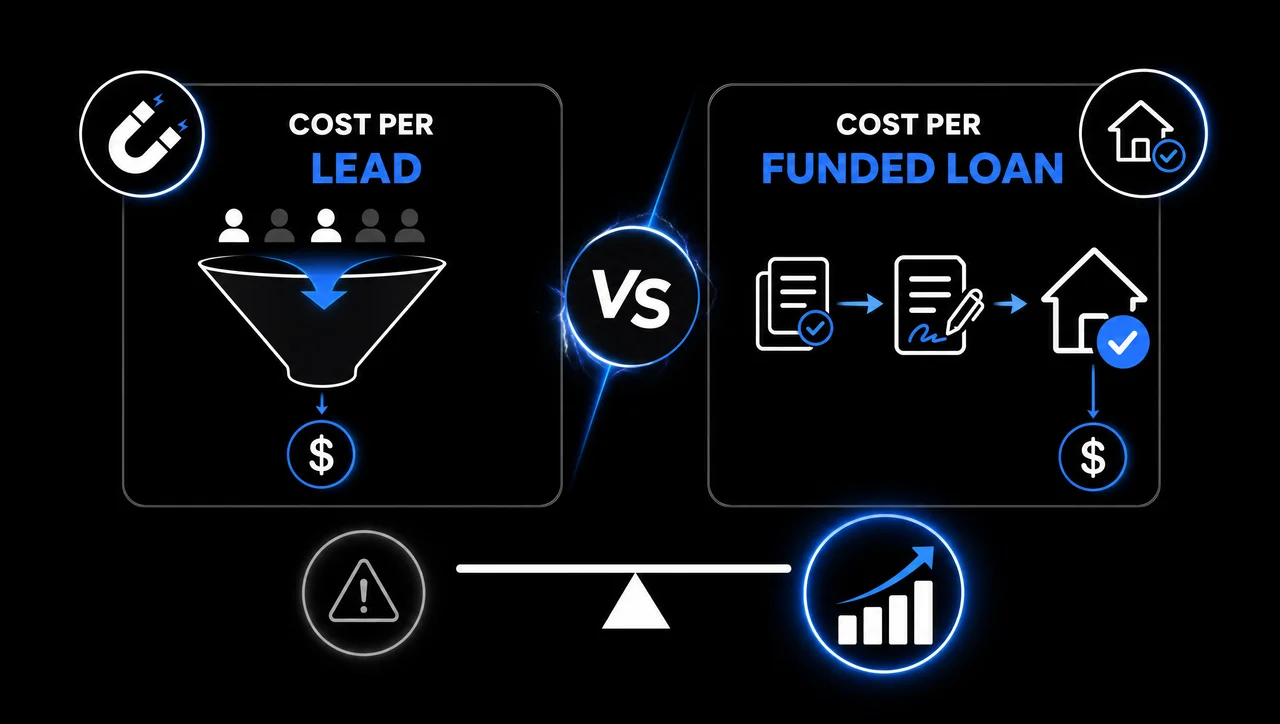
A mortgage campaign can generate 100 enquiries in a month and still produce very few funded loans. On the campaign report, the numbers may look encouraging. But when the lending team checks how many borrowers actually completed the process, the picture can change.
This is why mortgage companies need to look past cost per lead (CPL). A low lead acquisition cost does not automatically mean a successful marketing campaign. The more useful question is how much the business spends to acquire a borrower who eventually closes a loan.
What Does Cost Per Lead Tell You?
Cost per lead measures how much a business spends to generate one enquiry through its marketing campaigns. This metric helps marketing teams compare advertising channels, review campaign performance and understand how much it costs to attract potential borrowers. However, a form submission does not confirm that someone is ready to apply for a mortgage. Some enquiries may come from people researching rates, while others may not meet the lender’s basic requirements.
That is where CPL alone becomes an unreliable measure of success.
Why Cost Per Funded Loan Gives a Clearer Picture
Cost per funded loan measures the marketing expense associated with each completed, funded mortgage. Suppose the same $5,000 campaign generates 100 leads, but only five borrowers complete their loans. The cost per funded loan is $1,000.
This figure gives lenders a better view of their mortgage customer acquisition cost. It also helps them compare campaigns based on actual lending outcomes rather than enquiry volume.
Which Mortgage KPI Should Lenders Prioritise?
Cost per funded loan deserves more attention when evaluating the business outcome of mortgage marketing. However, CPL still has a useful job.
Both metrics answer different questions:
● Cost per lead: Is the campaign generating enquiries at a reasonable cost? ● Cost per qualified lead: Are those enquiries coming from suitable borrowers? ● Cost per funded loan: How much does the business spend to acquire a completed loan?
A campaign with a higher CPL may still deliver better results if its leads convert into funded loans more often. Cutting that campaign simply because its initial lead cost is higher could mean losing a valuable source of borrowers.
Final Thoughts
Mortgage marketing performance should be judged by what happens after someone submits an enquiry. CPL helps monitor lead-generation costs, while cost per funded loan connects advertising spend to completed lending business. Tracking both, alongside lead quality and conversion rates, gives lenders a more reliable basis for allocating their marketing budget.
FAQ
Frequently asked questions
What is a good cost per lead for mortgage companies?
How do you calculate cost per funded loan?
Why is cost per funded loan important in mortgage marketing?
Next step
Discuss this for your team
Book a strategy call and we'll apply this thinking to your accounts.