
Conversion Rate Optimisation: The Complete Beginner’s Guide
August 10, 2026 · 2 min read · by qcvimarketing@qcverify.com
Discover the fundamentals of conversion rate optimization, how CRO works, common mistakes to avoid, and how businesses can get more value from their existing website traffic.
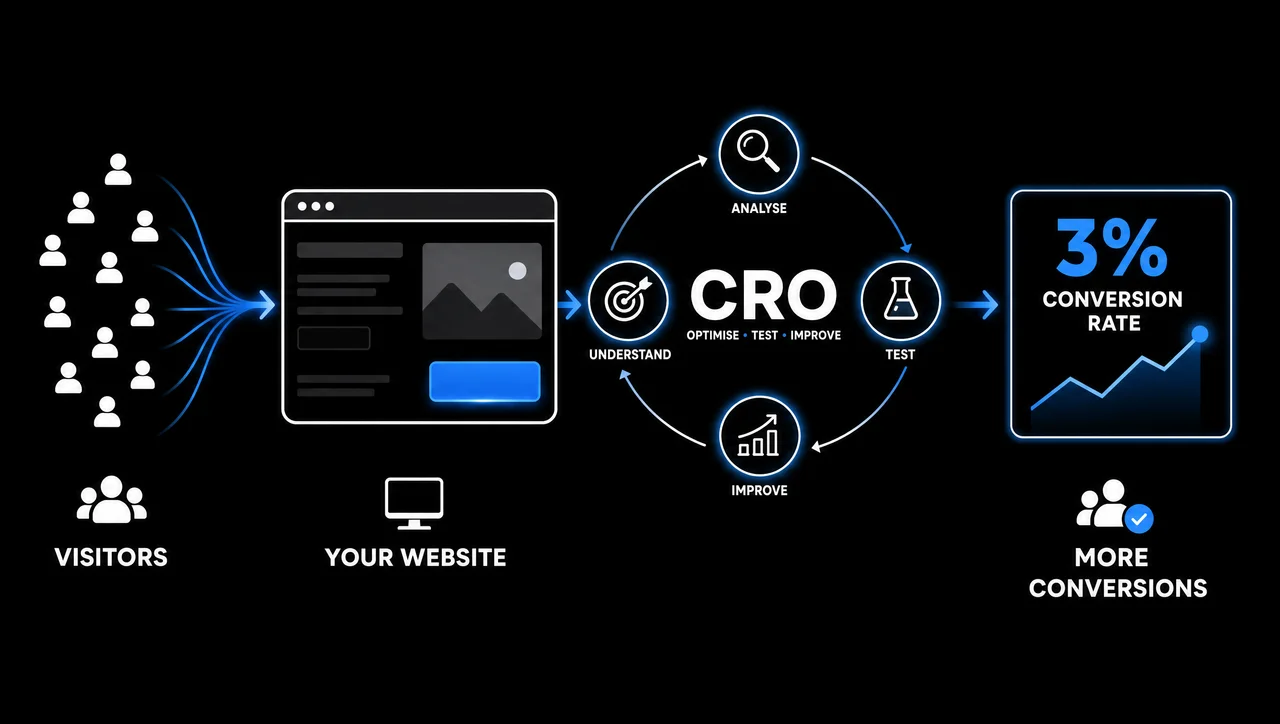
Getting visitors to your website is only one part of digital growth. The bigger challenge is turning those visitors into customers, leads, subscribers, or enquiries. This is where Conversion Rate Optimisation, commonly known as CRO, becomes important. It helps businesses improve their websites and marketing journeys so that more visitors take the desired action.
What Is Conversion Rate Optimisation?
Conversion Rate Optimisation is the process of improving a website or landing page to increase the percentage of visitors who complete a specific action. This could be making a purchase, filling out a form, booking a consultation, or signing up for an email list. For example, if 1,000 people visit a page and 30 complete a purchase, the conversion rate is 3 per cent. CRO focuses on understanding why the other visitors did not convert and finding practical ways to improve their experience.
Why Does CRO Matter?
Driving more traffic does not always mean generating more business. A website can receive thousands of visitors but still produce poor results if the pages are confusing, slow, difficult to navigate, or lack clear information. CRO allows businesses to get more value from their existing traffic. It can work alongside SEO services, paid advertising, email marketing service campaigns, and other digital marketing services. Instead of focusing only on attracting new visitors, businesses can also improve what happens after someone arrives on the website.
How Does Conversion Rate Optimisation Work?
Effective CRO starts with understanding user behaviour. Businesses can study website analytics, page performance, customer feedback, and user journeys to identify areas that may be causing visitors to leave. The next step is testing improvements. This might involve changing a headline, simplifying a form, improving product information, making a call to action clearer, or creating a more straightforward checkout process.
Testing is important because assumptions do not always reflect what customers actually prefer. A structured CRO approach uses real data to identify which changes improve results.
CRO for Ecommerce and Shopify Stores
For ecommerce businesses, even small improvements can have a meaningful impact on revenue. Product pages, navigation, trust signals, pricing information, and checkout experiences all influence purchasing decisions.
A Shopify growth agency may use CRO to improve product discovery, reduce cart abandonment, and create a smoother buying journey. When combined with SEO, email marketing, and performance marketing, CRO can become an important part of a broader growth strategy.
Common CRO Mistakes to Avoid
One common mistake is changing too many elements at once. When several changes are made together, it becomes difficult to understand what actually improved performance. Another mistake is focusing only on design. A visually attractive website still needs clear messaging, useful information, strong calls to action, and a simple user experience. Businesses should also avoid making decisions based only on personal opinions. Customer behaviour and reliable data should guide the optimisation process.
Final Thoughts
Conversion Rate Optimisation is a continuous process of understanding visitors, finding issues, testing improvements, and learning from results. It helps ecommerce, B2B, and service businesses get more value from existing traffic and improve the customer journey.
QCVIGrowth supports businesses by connecting conversion rate optimisation with SEO, content, paid advertising, and other growth strategies to improve overall marketing performance.
Frequently asked questions
What is a good conversion rate?
How long does CRO take?
Is CRO useful for small businesses?
Is CRO the same as SEO?
Want to discuss something similar for your team?
Book a strategy call