Digital Marketing Strategy
Agency vs In-House Marketing: Which Makes More Sense For Your Business?
October 23, 2026 · 2 min read · by qcvimarketing@qcverify.com
Should you hire an in-house marketer, work with an agency, or combine both? Explore the differences in costs, expertise, business knowledge, and flexibility to determine which marketing setup fits your company's needs.
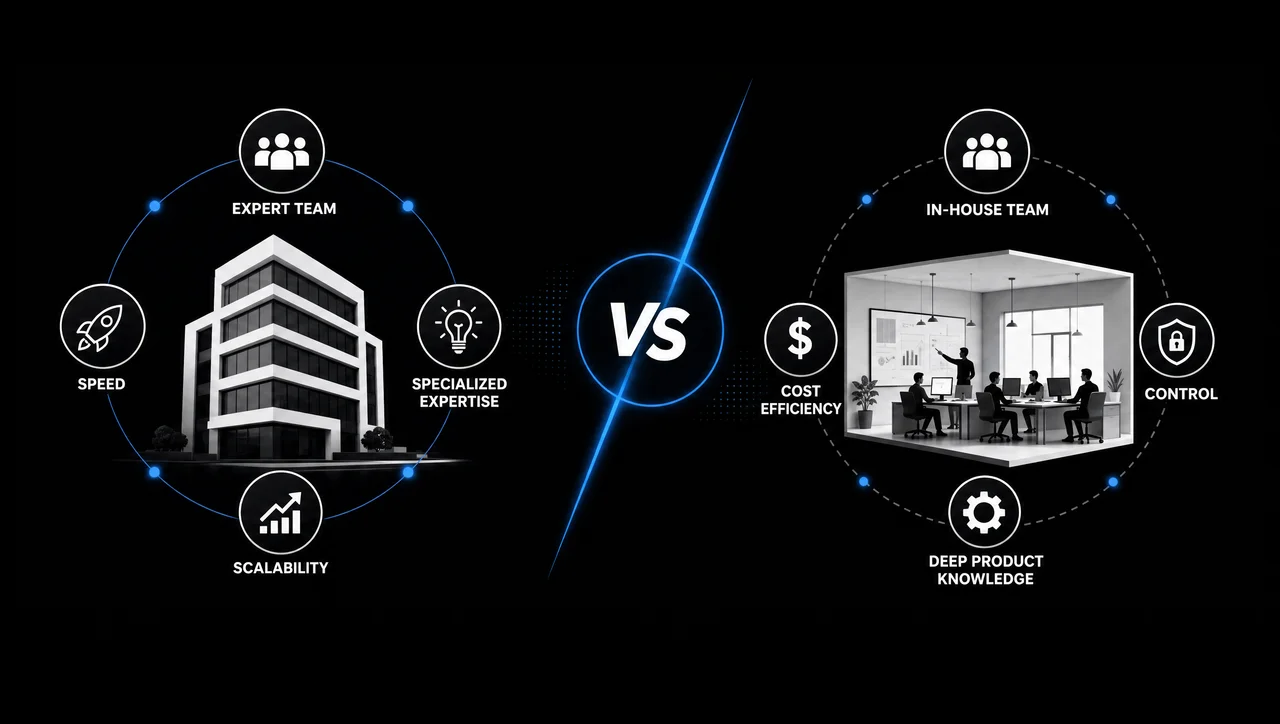
A company has enough marketing work to justify another hire. There is just one problem: one person cannot be an expert in everything the business needs. Paid advertising, SEO, content, analytics, and website optimisation all require different skills. Hiring several specialists may stretch the budget, but handing everything to an agency means relying on people outside the company.
This is the real decision behind agency vs in-house marketing. The question is which setup gives your business the skills and capacity it needs at a reasonable cost.
The Salary Is Only Part of the Cost
Hiring an in-house marketer gives you someone who can focus on your business every working day. However, recruitment, salary, benefits, training, and software all add to the expense. If you later need a designer, an SEO specialist, and a paid media manager, the payroll grows further.
An agency offers another arrangement. You pay for an agreed scope of work and gain access to several specialists without employing each of them. That can make sense when you need expertise across multiple channels but do not have enough work to keep each specialist busy full time.
There is a catch: agency fees do not always cover everything. Advertising spend, website development, and extra creative projects may be charged separately. Compare actual deliverables and total costs, not just the monthly fee.
Who Understands Your Business Best?
An internal team is close to the decision-makers. It can speak directly with sales staff, hear customer objections, and learn about product changes before they reach the market. That knowledge is particularly useful when marketing requires constant coordination with other departments.
An agency may bring stronger specialist experience in areas your team has not handled before. For example, a business preparing to expand its paid campaigns may need better conversion tracking, landing page testing, and budget analysis. External specialists can help build those capabilities.
But an agency cannot learn the business through reports alone. Someone internally still needs to share customer insights, explain commercial priorities, and review whether campaign leads are genuinely useful.
Think About the Work You Will Need Next Year
A company running a few established campaigns may be comfortable with one marketer and occasional outside support. A business entering new markets or launching products every month could need a wider team.
Hiring gives you close control, but recruitment takes time, and staffing costs continue even when priorities change. An agency can often provide additional specialist support more flexibly, depending on its contract and available capacity.
Some businesses combine both approaches. An internal marketing lead keeps the brand and business priorities aligned, while agency specialists handle selected work such as SEO, paid media, and conversion optimisation.
Final Thoughts
Before choosing, write down the marketing work that needs to happen every month and the skills required to do it properly. Then compare that workload with the cost of hiring and the services an agency would provide. The better option is the one that covers your real needs without leaving important work unattended or paying for capacity you rarely use.
FAQ
Frequently asked questions
Is an agency cheaper than an in-house marketing team?
What is the main advantage of in-house marketing?
Is a hybrid marketing team worth considering?
Next step
Discuss this for your team
Book a strategy call and we'll apply this thinking to your accounts.