
Digital Marketing / Conversion Rate Optimization (CRO)
5 Signs Your Business Has a Traffic Problem vs. a Conversion Problem
October 9, 2026 · 3 min read · by qcvimarketing@qcverify.com
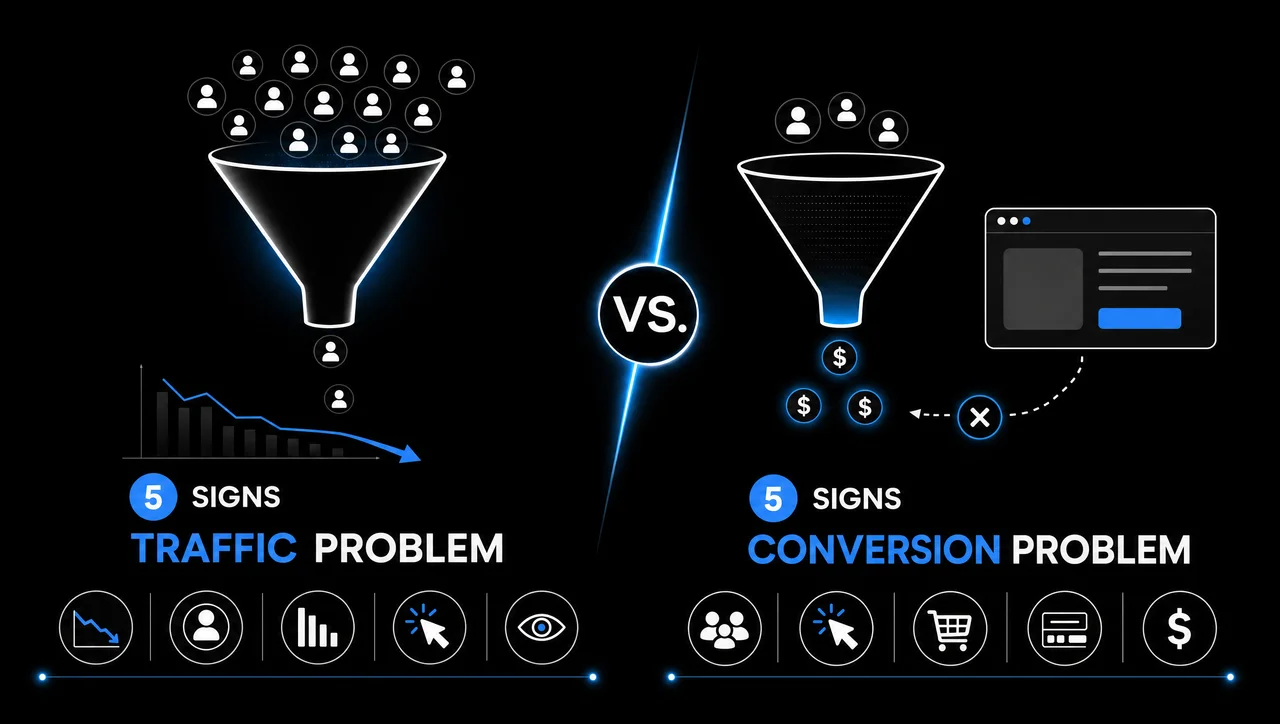
A website can get 10,000 visitors and still leave the sales team waiting for leads. Another site can receive 1,500 visitors and generate business every week. The difference is rarely the traffic number alone. When growth slows, businesses often respond by buying more ads, publishing more content, or chasing higher search rankings. That can make an existing problem more expensive. Before increasing traffic, look at what happens after someone arrives. Here are five signs to help you determine whether the real issue is traffic or conversion.
1. Your traffic is high, but inquiries remain low
If website traffic has increased while inquiries, purchases, or demo requests have barely moved, check your conversion rate before spending more on acquisition. A low conversion rate usually points towards the website experience, offer, landing page, or buying process. Look at where visitors leave and whether the page gives them a clear reason to continue. This is where conversion rate optimization becomes useful. Small changes to page structure, messaging, and calls to action can matter more than increasing traffic.
2. Visitors arrive, then leave quickly
A high bounce rate does not automatically mean your website is failing. It becomes more useful when you compare it with traffic source and user intent. Someone searching for “pricing for enterprise CRM software” has different expectations than someone clicking a broad social media post. If the landing page does not match what the visitor expected, they have little reason to stay. Check your search queries, ad messaging, and landing pages together. If the wrong people are arriving, you have a traffic quality problem.
3. Your best traffic sources convert well
This is one of the clearest clues.
Suppose organic search visitors convert at a healthy rate while paid traffic produces plenty of sessions but very few leads. Your website may not need a complete rebuild. The problem could be targeting, ad creative, audience selection, or the offer being shown. Compare conversion rate by channel, campaign, device, and landing page. Averages often hide the useful answer.
4. Product or service pages get attention but no action
People may read your pages, scroll through offers, and even return later without contacting you or buying. Look closely at the final step. Is the next action obvious? Does the page answer the questions that normally delay a purchase? Is there enough information to make someone comfortable moving forward? This is often a landing page optimization issue rather than a traffic shortage. For businesses already attracting relevant visitors, improving the website and funnel experience can be more sensible than immediately increasing acquisition spend.
5. More traffic produces more visits, but not more revenue
This is the test that matters most. Traffic should eventually connect to leads, sales, customer value, and revenue. If sessions keep climbing while commercial results stay flat, investigate the full conversion funnel. Start with the source of the traffic, then follow the visitor through the landing page, offer, form, or checkout. You may find that acquisition is working perfectly well and the leak happens later. If traffic itself is weak, SEO and search strategy deserve closer attention. A useful SEO approach should focus on attracting people who are actually looking for what you sell, not simply increasing visits.
Final Thoughts
More website traffic is not automatically the next move. First, find the point where potential customers stop moving forward. If relevant people are reaching your site but taking no action, work on conversion rate optimization. If your pages convert reasonably well but the audience is too small or poorly matched, fix the traffic side. The better question is simple: where does the customer journey break? That answer gives you a much better starting point than another traffic target.
FAQ
Frequently asked questions
How do I know if I have a traffic or conversion problem?
What is a good website conversion rate?
Can SEO fix a conversion problem?
Should I increase ad spend when website conversions are low?
Next step
Discuss this for your team
Book a strategy call and we'll apply this thinking to your accounts.