
Mortgage Marketing
25 Marketing Strategies Every Loan Officer Should Use
September 21, 2026 · 3 min read · by qcvimarketing@qcverify.com
A practical guide to marketing for loan officers, covering local SEO, content, paid advertising, referrals, landing pages, CRM workflows, follow-up, and measurement.
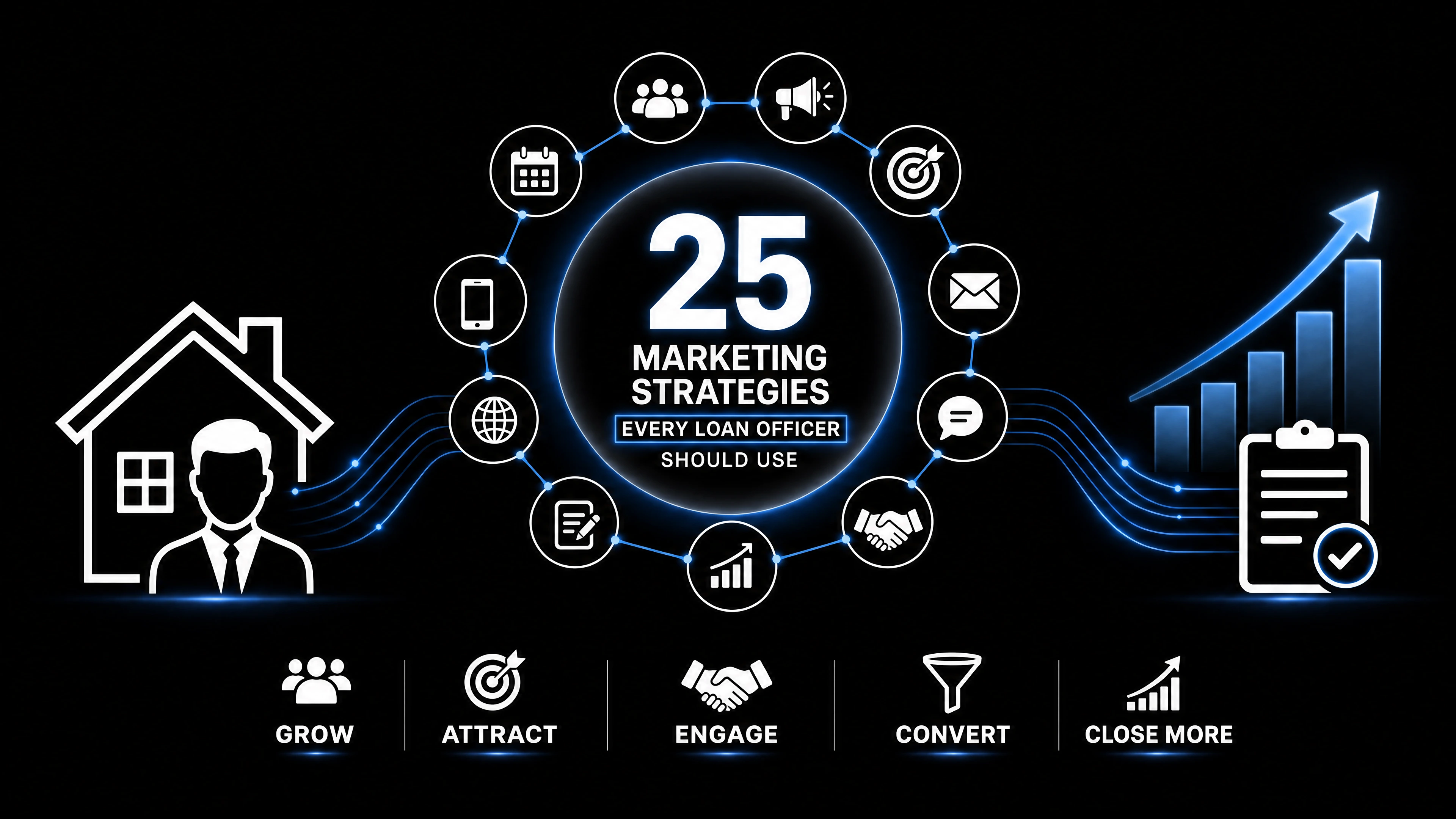
A loan officer can have a strong referral network and still struggle when the pipeline slows down. The problem usually starts before the application. If potential borrowers cannot find you, understand what you offer, or trust you enough to make contact, another loan officer gets the conversation. That is why a practical loan officer marketing strategy needs more than occasional social media posts. It should connect local visibility, useful content, paid advertising, follow-up, and conversion-focused landing pages.
25 Marketing Strategies for Loan Officers
Start with a professional website that clearly explains your loan programs, service areas, and next steps. Build dedicated landing pages for purchase loans, refinancing, first-time homebuyers, and other important borrower segments.
Use local SEO so borrowers searching for a mortgage lender or loan officer in their area can find you. Keep your Google Business Profile accurate and collect genuine reviews from satisfied clients.
Publish educational mortgage content that answers questions borrowers actually ask. Topics such as mortgage rates, down payments, closing costs, credit requirements, and pre-approval can attract people before they are ready to apply.
Use short-form videos to explain complicated mortgage topics in plain English. A 45-second explanation from a real loan officer can feel more useful than another polished advertisement.
Run Google Ads for high-intent searches and Meta Ads for audience building and retargeting. Keep the message specific to the borrower rather than simply advertising that you offer mortgages.
Create separate campaigns for first-time buyers, investors, self-employed borrowers, veterans, and homeowners considering refinancing. Each audience has different concerns.
Build retargeting campaigns for people who visited your website but did not submit an inquiry. Many borrowers need several interactions before contacting a lender.
Use email marketing to stay connected with past clients, prospects, referral partners, and leads who are not ready yet.
Create a simple lead magnet, such as a home-buying checklist or mortgage preparation guide. Give visitors a useful reason to provide their contact information.
Ask for reviews after successful transactions and make the process easy. Reviews help establish trust when someone is comparing several local loan officers.
Build referral relationships with real estate agents, builders, financial professionals, and other relevant partners. Give partners useful educational material they can share with their clients.
Use co-branded educational campaigns with referral partners where appropriate and compliant.
Track every lead source. You should know whether an inquiry came from Google, Meta, organic search, referrals, email, or another channel.
Connect marketing data with your CRM and loan workflow, so leads don't disappear between the first inquiry and the application.
Respond quickly to new inquiries. A strong campaign can generate leads, but slow follow-up can waste the entire acquisition cost.
Write follow-up messages around the borrower’s situation instead of sending the same generic message to everyone.
Use SMS carefully and only where permitted, with appropriate consent and compliance controls.
Create FAQ content around objections. Questions about credit scores, income, down payments, documentation, and closing costs often reveal where borrowers are getting stuck.
Test landing page headlines, forms, calls to action, and page layouts. Small changes can affect how many visitors become leads.
Review your paid advertising creative regularly. Mortgage advertising can become stale quickly when every ad looks and sounds the same.
Use analytics to measure cost per lead, lead quality, application rate, and funded loan volume instead of judging campaigns only by clicks.
Keep compliance involved from the beginning. A campaign that takes weeks to approve is difficult to scale, so build review requirements into the marketing process.
Create a recognizable personal brand. Consistent photography, messaging, educational content, and local expertise make it easier for prospects to remember you.
Build content around seasonal borrower needs, local housing activity, rate changes, and questions coming from your current pipeline.
Finally, review your marketing every month. Cut channels that generate attention without qualified conversations, then put more testing behind the channels that produce applications and funded loans.
Final Thoughts
Effective mortgage marketing is rarely one campaign or one social platform. It is the system connecting discovery, trust, lead capture, follow-up, and measurement. For loan officers, the biggest improvement often comes from fixing the gaps between those stages. A strong mortgage marketing strategy can combine paid acquisition, SEO, content, landing pages, CRM workflows, and conversion tracking so every marketing activity has a clear job. The goal is simple: make it easier for the right borrower to find you, understand you, contact you, and keep moving toward an application.
FAQ
Frequently asked questions
What is the best marketing strategy for a loan officer?
How can loan officers generate more mortgage leads?
Is social media important for mortgage marketing?
How can a loan officer improve local SEO?
Should loan officers use paid advertising?
Next step
Discuss this for your team
Book a strategy call and we'll apply this thinking to your accounts.